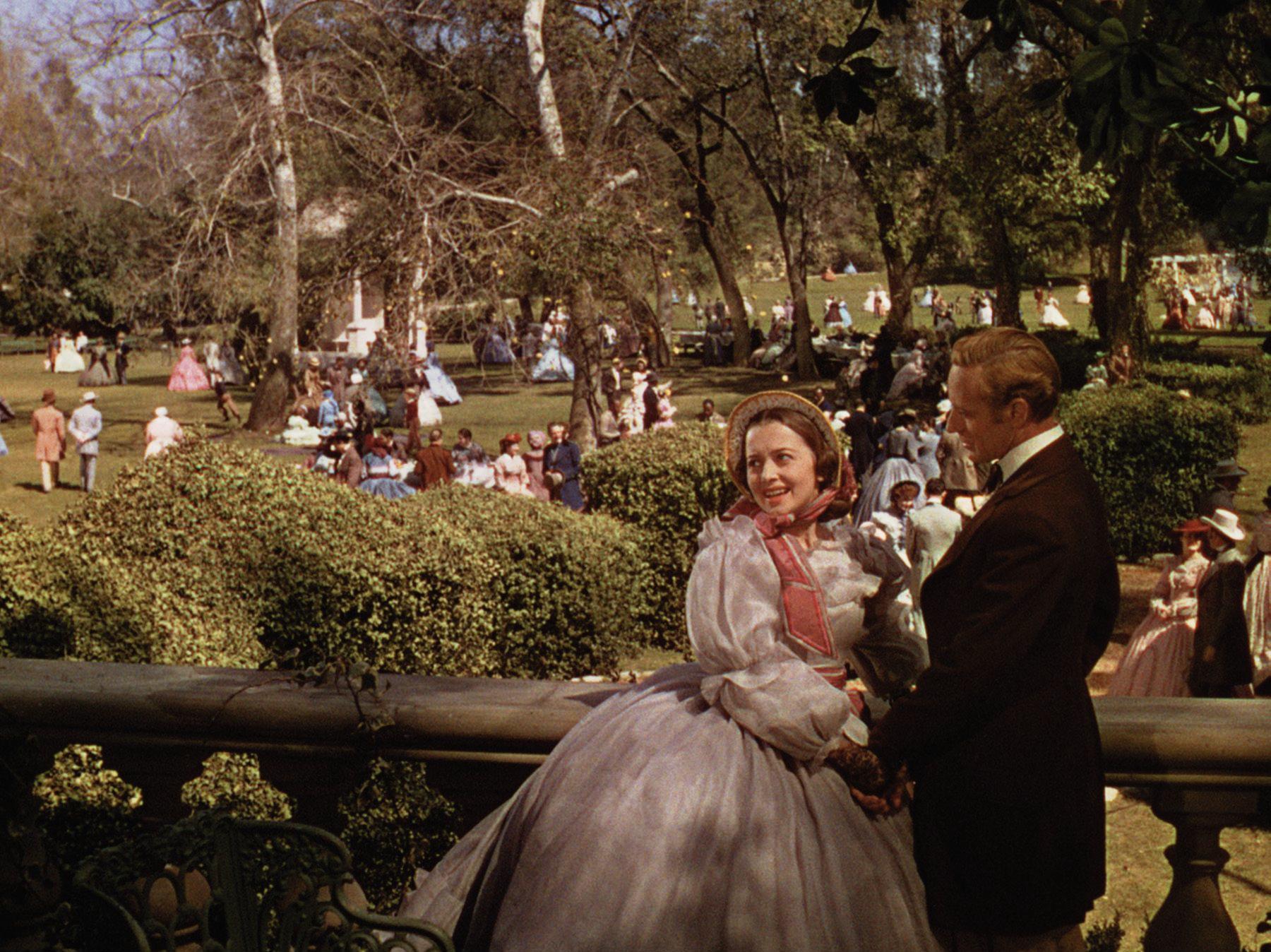
Let's be honest about Ashley Wilkes. Most people who watch or read Gone with the Wind for the first time spend half the story waiting for him to finally do something. Anything. But he doesn't. While Scarlett O'Hara is out there killing intruders and digging up radishes in the dirt to survive, Ashley is basically just... leaning against a fence post, looking sad about the "good old days." It’s infuriating.
Ashley Wilkes from Gone with the Wind is arguably one of the most polarizing characters in American literary history, mostly because he’s the personification of a world that was already dead before the first cannon fired at Fort Sumter. He’s the ultimate "wet blanket." But if you look closer, he’s also the most honest representation of what happens when a person’s entire identity is tied to a system that no longer exists. Margaret Mitchell didn’t write him to be a hero; she wrote him to be a ghost who was still breathing.
He’s a scholar. He’s a dreamer. Honestly, he’s kind of a coward when it comes to the women in his life. But he’s the glue that holds Scarlett’s obsession together, for better or—mostly—for worse.
The Myth of the Southern Gentleman
When we first meet Ashley at the Twelve Oaks barbecue, he’s the envy of every man and the desire of every woman in the County. He has that "distinguished" air. Leslie Howard, who played him in the 1939 film, captured that perfectly—the pale, blonde, slightly tired look of a man who would rather be reading poetry in Italy than managing a cotton plantation.
You’ve got to understand the context of the 1860s South to get why Ashley was such a big deal. He represented the "cavalier" ideal. While Rhett Butler was a "cad" who made money through blockade running and didn't care about "The Cause," Ashley was the honorable son who went to war because he felt he had to, not because he believed in it. In the book, Mitchell makes it clear: Ashley knew the South was going to lose. He wasn't a fire-eater. He was just a man caught in a tidal wave.
Why did Scarlett love him? It wasn't because they were a good match. It was because he was the only thing she couldn't have. Scarlett is a predator; she sees something, she wants it, she grabs it. Ashley was the only person who said "no" to her, even if it was a very shaky, hesitant "no." That rejection fueled a fifteen-year obsession that practically destroyed her life.
The Twelve Oaks Problem: Why He Married Melanie
People always ask: if Ashley loved Scarlett (or at least was attracted to her), why did he marry Melanie Hamilton?
Basically, he married his own reflection. Melanie was "of his kind." She liked the same books, she had the same quiet temperament, and she understood the unspoken rules of their social class. Ashley knew that Scarlett was a force of nature. He famously told her that a marriage between them would be a disaster because they were too different. He said she was like "the sun or a wind or a storm," while he was just a quiet person.
But here’s the thing: he was selfish.
Ashley Wilkes is a man who wanted his cake and wanted to eat it too. He wanted the stability and moral grounding of Melanie, but he wanted the ego boost of knowing the most beautiful woman in Georgia was crying over him. He kept Scarlett on a hook for years. Every time he came home on leave, or every time they spoke in private, he gave her just enough hope to keep her from moving on. It’s arguably the most toxic dynamic in the entire story.
Survival and the "Wilkes" Curse
The Civil War ends, and suddenly the world of Twelve Oaks is gone. It's burned to the ground. This is where the character of Ashley Wilkes in Gone with the Wind really starts to grate on modern audiences.
He’s useless.
Scarlett takes over Tara. She works the fields. She kills a Yankee. She moves to Atlanta and starts a lumber business. She becomes a "New South" entrepreneur. Ashley, meanwhile, sits on the porch at Tara and talks about how much he misses his books. He even admits to Scarlett that he’s terrified of the new world. He has no "sand" in him, as the characters would say.
This isn't just a character flaw; it's a thematic point. Mitchell was showing that the old aristocracy was built for a world of leisure supported by a horrific system of slavery. Once that system was dismantled, men like Ashley—who were trained for nothing but being "gentlemen"—had no place left to go. He was a relic.
- He tried to farm, and he failed.
- He tried to manage the mill, and he was terrible at it.
- He let Scarlett pay his bills and support his wife and child.
It’s hard to feel bad for a guy who lets a woman he "loves" do all the heavy lifting while he mopes about his lost soul.
The Great Misconception: Was He a Coward?
A lot of people label Ashley a coward. That's not entirely fair. He fought in the war. He went through the hell of a Union prisoner-of-war camp at Rock Island. He faced death.
Physical courage wasn't his problem. It was moral and emotional courage he lacked. He couldn't stand up to Scarlett, and he couldn't be honest with himself. He spent the entire book (and movie) hiding behind Melanie’s skirts. Melanie was the strong one. She was the one who defended Scarlett to the town gossips, and she was the one who gave Ashley the strength to keep living. When Melanie dies at the end of the story, Ashley finally collapses. He realizes that he never really loved Scarlett; he just loved the idea of being loved.
Leslie Howard vs. The Book Ashley
It's worth noting that Leslie Howard actually hated playing Ashley Wilkes. He thought the character was a "dreadful bit of casting" and that he was too old for the role (he was 45 playing a man in his 20s and 30s).
In the book, Ashley is more complex. He’s more cynical. He talks more about his disillusionment. In the movie, he can come across as a bit of a cardboard cutout. But Howard’s performance—that dreamy, distant look in his eyes—actually works well to convey a man who is mentally living in 1859 while his body is stuck in 1870.
Why We Still Talk About Him
We talk about Ashley because he represents the danger of nostalgia. He is the poster child for "looking back."
While Rhett Butler is looking at the future (and making a killing doing it), Ashley is stuck in the past. He’s a warning. If you spend your whole life mourning what you lost, you’ll never see what you have right in front of you. Scarlett didn't realize until the very last pages that she didn't love Ashley—she loved a suit of clothes she’d put on a mannequin. She loved a version of him that didn't exist.
The tragedy of Ashley Wilkes in Gone with the Wind is that he knew he was a fraud. He knew he wasn't the hero Scarlett thought he was. He was just a tired man who wanted the world to stop changing.
Key Takeaways for Understanding Ashley Wilkes
- The "Great Divide": Ashley represents the Old South (the "Cavalier" myth), while Rhett represents the New South (pragmatism and survival).
- The Emotional Vampire: By refusing to clearly reject Scarlett, he tethered her to a fantasy that prevented her from finding happiness with Rhett.
- The Role of Melanie: Ashley wasn't the "strong, silent type." He was a dependent. Melanie was his backbone. Without her, he was effectively a ghost.
- Symbolism: He is the "perfect" man on paper, but a complete failure in practice. This is Margaret Mitchell’s critique of the Southern aristocracy.
To truly understand the story, you have to stop seeing Ashley as a romantic lead. He’s the antagonist to Scarlett’s growth. Every time she tries to move forward, her obsession with Ashley pulls her back into a world that no longer exists.
If you're revisiting the story, pay attention to the scene where Ashley returns from the war. Watch how he interacts with the dirt. He hates it. Scarlett embraces it. That’s the whole story in a nutshell.
Actionable Insights for Literature Enthusiasts:
- Read the "Twelve Oaks" chapter again: Specifically focus on the conversation between Ashley and his father, John Wilkes. It provides the best insight into his internal resignation.
- Compare the "Glove Scene": Look at how Ashley reacts when Scarlett gives him her hand to kiss versus how Rhett reacts. It reveals the fundamental difference between "polite society" and "raw passion."
- Study the "Lost Cause" Narrative: Research how the character of Ashley was used after the book's release to romanticize the Confederacy, and how modern literary critics have deconstructed that image.
- Analyze the Mill Scene: Notice how Ashley’s inability to handle the "convict labor" at the mill isn't just about morality; it's about his inability to function in a competitive, cutthroat economy.