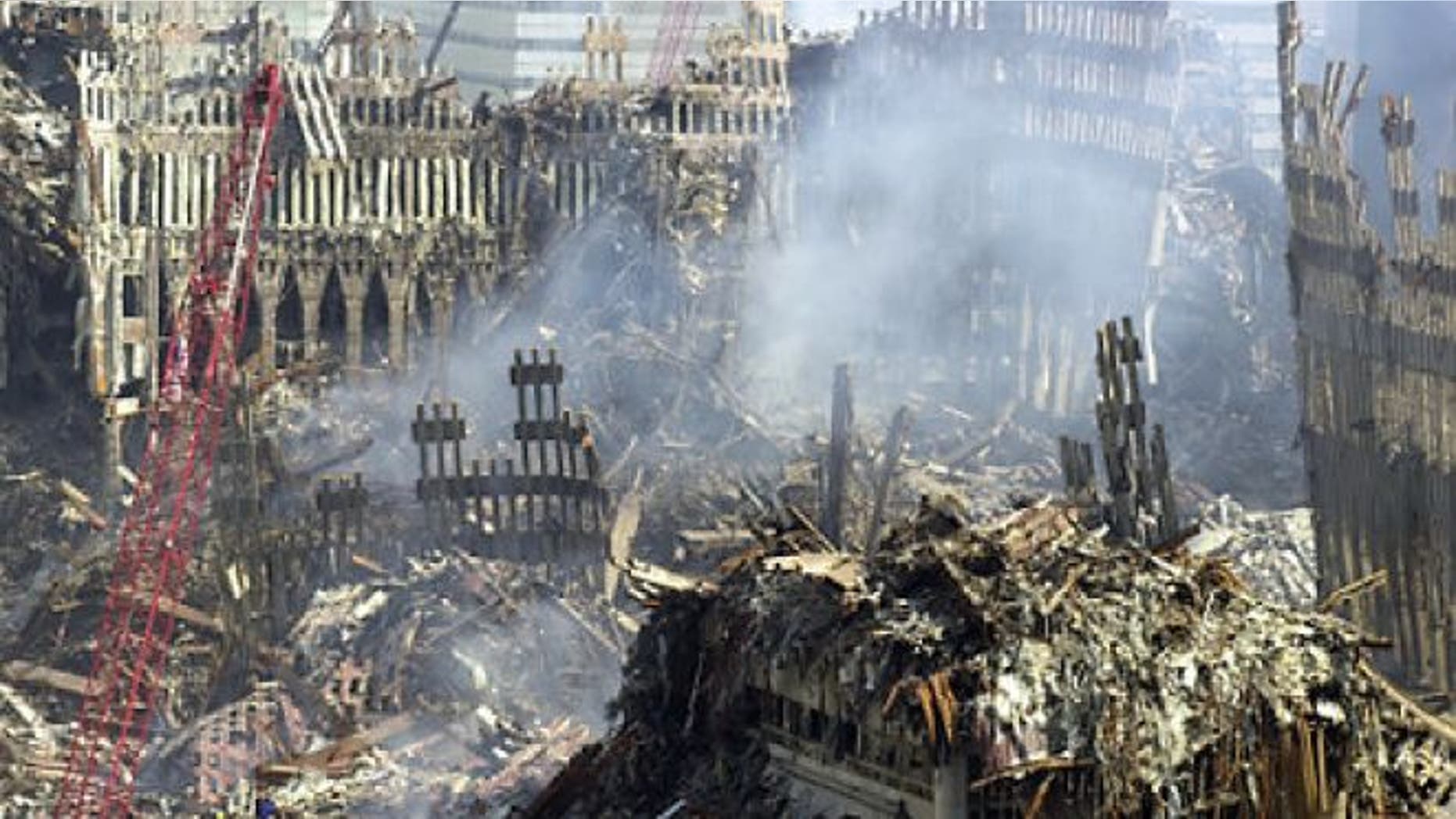
It’s been decades, but the image of those buildings coming down is still burned into the collective memory of the world. Even now, if you scroll through a comment section on any engineering forum or history video, the same heated debate pops up. People want to know the mechanics. They want to know why a building designed to withstand a jumbo jet didn't stay standing. Honestly, the answer to how did the world trade towers collapse isn't found in a single explosion or a single moment of failure. It was a cascading series of structural betrayals.
Physics is unforgiving.
When American Airlines Flight 11 and United Airlines Flight 175 hit the North and South Towers, they didn't just cause localized damage. They fundamentally altered the chemistry and physical integrity of the structures. Most people think the buildings fell because the steel melted. That’s actually a huge misconception you hear all the time. Steel doesn't have to melt to lose its strength; it just needs to get soft.
The Tube Frame System and the Impact
To understand why they fell, you have to understand how they were built. In the 1960s, engineers Leslie Robertson and John Skilling moved away from the traditional "grid" of internal columns. Instead, they used a "tube" design. Basically, the building was a giant square straw. The outer walls—those closely spaced vertical steel columns—carried the bulk of the wind loads and supported the weight of the structure along with the massive central core.
When the planes hit, they severed a massive chunk of those perimeter columns.
In the North Tower, about 35 of the 236 perimeter columns were destroyed instantly. The South Tower lost about 33. But here is the thing: the buildings didn't fall right away. They actually stayed standing for 102 minutes and 56 minutes, respectively. This proves the "tube" design was incredibly robust. The loads were redistributed to the remaining columns. It was a feat of engineering that they didn't topple the second the nose of the plane touched the aluminum siding.
The jet fuel was the catalyst, but not in the way you might think. We aren't talking about a "pool fire" like a backyard BBQ. We are talking about thousands of gallons of fuel dumping down elevator shafts and across open-office floor plans. It acted like a massive accelerant for the "office furnishings." Desks, paper, carpets, and partitions. These things burn hot.
Why the Steel Softened
Let's talk about the heat. You'll hear skeptics say "jet fuel can't melt steel beams." Technically, they are right. Jet fuel burns at roughly 800°F to 1500°F. Steel melts at around 2750°F. But here is the kicker: steel loses about 50% of its structural strength at only 1100°F.
At that temperature, it becomes plastic. It’s like a stick of cold butter vs. a stick of butter that’s been sitting on a sunny dashboard. It still looks like butter, but it can't support any weight.
According to the National Institute of Standards and Technology (NIST), which conducted the definitive federal investigation, the sag was the real killer. The floor trusses were long, lightweight steel spans. As they heated up, they began to expand. But since they were bolted to the core and the perimeter, they had nowhere to go. So, they bowed downward.
Imagine a horizontal line between two points. Now, pull the middle of that line down. The ends of the line start pulling the two points toward each other. This is exactly what happened to the perimeter columns of the World Trade Center. The sagging floors pulled the outer walls inward.
The Inward Bowing Phenomenon
In the South Tower, NIST investigators found clear photographic evidence of the eastern face bowing inward by about 20 inches just before the collapse. That’s huge. That’s a death sentence for a skyscraper.
The columns were already stressed from the initial impact. Now, they were being pulled toward the center of the building by the warped floors. Eventually, the weakened, heated steel couldn't hold the weight of the 30-plus floors sitting above the impact zone. Once those columns buckled, there was no going back.
The collapse of the South Tower happened faster because the plane hit lower and at an angle. It clipped the corner and put more weight on fewer columns. Gravity took over.
Once the top section of the building started moving, it became a massive piston. You have 30,000 tons of steel and concrete dropping one floor. The floor below it was never designed to catch that much weight falling at that speed. It was a dynamic load, not a static one. Each floor it hit added more mass and more momentum to the pile. This is why the towers seemed to "pulverize" as they fell. The air being pushed out of the windows as the floors pancaked created those "puffs" of dust that people often misinterpret.
Misconceptions About WTC 7
You can't discuss how did the world trade towers collapse without mentioning World Trade Center 7. This was the 47-story building across the street that fell later that afternoon. It wasn't hit by a plane.
For years, this was the "smoking gun" for conspiracy theorists. But the reality is actually more fascinating from an engineering perspective. WTC 7 fell because of "thermal expansion." Because the sprinklers didn't work (the water lines were severed by the twin towers' collapse), the fire burned unchecked for seven hours.
A specific long-span girder expanded so much that it pushed a floor beam off its seat. This triggered a progressive collapse. One column failed, then the next, then the next. It was the first time a steel-frame skyscraper collapsed primarily due to fire. It changed the way we build skyscrapers forever. We realized that fireproofing isn't just a "nice to have"—it’s the only thing keeping the skeleton of a city alive.
Lessons Learned for Future Engineering
The collapse changed the International Building Code (IBC) in ways we take for granted now. We don't just spray-on fireproofing and hope for the best anymore.
- Impact-Resistant Stairwells: Older buildings had drywall around stairs. Now, high-rises use reinforced concrete or hardened shafts so people can actually get out if the walls are damaged.
- Redundant Fireproofing: The "fluffy" stuff they sprayed on the WTC steel was knocked off by the vibrations of the plane crash. Today, the bond strength requirements for fireproofing are much higher.
- Structural Redundancy: We no longer rely so heavily on a "thin-wall" tube. Modern skyscrapers often use a "core-and-outrigger" system that provides more paths for weight to travel if part of the building is damaged.
The towers didn't fall because of a single failure. They fell because a "perfect storm" of kinetic energy, thermal weakening, and structural pulling combined to overwhelm the laws of gravity. It’s a sobering reminder that even our greatest monuments are subject to the basic rules of thermodynamics.
If you want to dig deeper into the actual blueprints and the NIST NCSTAR 1 reports, the most important thing to look for is the "P-delta effect." It explains how even a small displacement in a column can lead to a total collapse under a heavy load. Understanding the physics doesn't make the event any less tragic, but it does help us build a world where it’s much less likely to happen again.
Actionable Insights for the Curious
- Check the Data: Read the NIST Federal Building and Fire Safety Investigation of the World Trade Center Disaster. It's dense, but it's the gold standard for factual data.
- Look at the Blueprints: Study the "Tube-frame" architecture pioneered by Fazlur Rahman Khan. It explains why the towers looked and behaved differently than the Empire State Building.
- Follow the Materials: Research the "Loss of Young’s Modulus" in structural steel. It’s the scientific term for why the steel "softened" without melting.
- Review Building Codes: If you live or work in a high-rise, look into the 2009 and 2012 IBC updates to see how your specific building might be safer than those built in the 1970s.