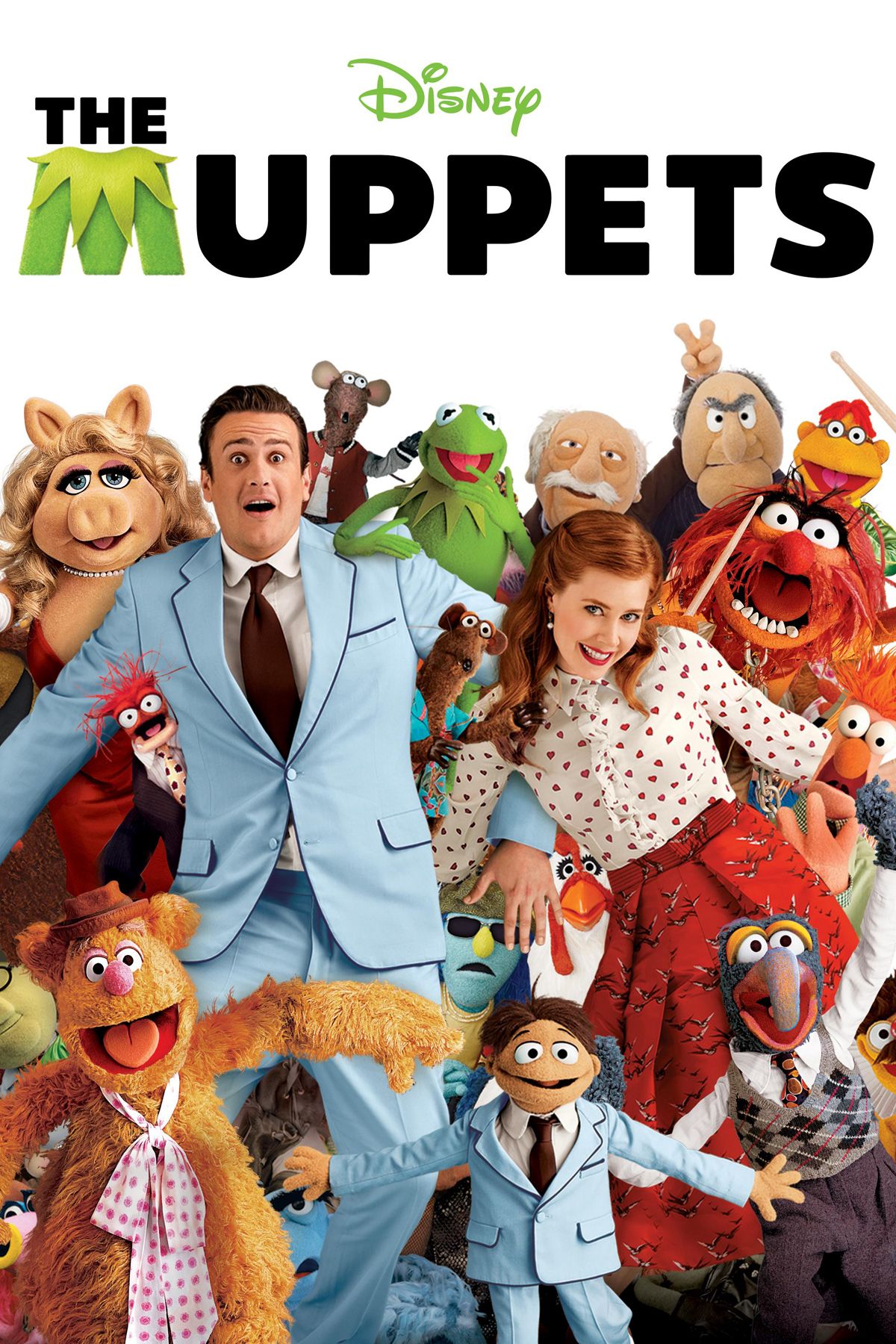
It was 2011. The Muppets were basically a memory. Disney had the rights, sure, but nobody really knew what to do with a bunch of felt puppets in an era dominated by Pixar’s digital perfection and the gritty realism of the Dark Knight. Then Jason Segel showed up. He didn't just want to make a movie; he wanted to save a franchise. Honestly, looking back at The Muppets 2011 cast, it’s kind of a miracle it worked. You had a massive sitcom star, an Oscar-nominee like Amy Adams, and a villain played by Chris Cooper who actually had to rap.
It was a big risk.
The thing about this specific ensemble is that it wasn't just about the humans. It was about reintroducing the world to Kermit, Piggy, and the gang after they’d spent years relegated to TV specials and viral YouTube clips like "Ode to Joy." People forget that before this movie, the Muppets were drifting. They felt like "your dad’s favorite show." Segel and co-writer Nicholas Stoller changed that by leaning into the nostalgia rather than running away from it.
The Human Element: Jason Segel and Amy Adams
Jason Segel played Gary. Gary was simple, sweet, and perhaps a little too attached to his brother, Walter. Segel’s involvement was the heartbeat of the project. He’d already proven he could handle puppets with the Dracula musical at the end of Forgetting Sarah Marshall, but this was different. He had to be the "straight man" to a cast of chaos agents.
Then there’s Amy Adams as Mary.
At the time, Adams was already a powerhouse, but she brought this 1950s-technicolor energy to the role of the small-town teacher. She spent most of the movie being incredibly patient while Gary prioritized Muppet reunions over their anniversary. It’s a role that could have been thankless. Instead, she made it feel like a genuine part of the Muppets' whimsical reality. She sang. She danced. She didn't wink at the camera.
That’s the secret.
If the humans in a Muppet movie look like they’re in on the joke, the magic dies. Segel and Adams played it completely straight. When Gary sings "Man or Muppet," he isn't mocking the concept. He’s having a genuine existential crisis. That song eventually won an Academy Award for Bret McKenzie, and it’s largely because the performance was so sincere.
Why The Muppets 2011 Cast Had to Be Huge
You can’t have a Muppet movie without a villain who hates laughter. Enter Chris Cooper as Tex Richman.
Cooper is an "actor’s actor." He has an Oscar for Adaptation. He does serious drama. So, seeing him play a tycoon who wants to drill for oil under the Muppet Studios was a stroke of genius. He had to perform a villain rap called "Let’s Talk About Me." It’s awkward. It’s weird. It’s exactly what the movie needed.
But the "cast" isn't just the leads.
The cameos were out of control. This is a Muppet tradition, but 2011 took it to a different level. You had Jack Black being kidnapped and forced to be the celebrity host of the telethon. You had Rashida Jones as the cold-hearted television executive who finally gives them a break.
- Zach Galifianakis as Hobo Joe.
- Jim Parsons as the human version of Walter.
- Ken Jeong and Donald Glover in small, blink-and-you’ll-miss-them roles.
- Emily Blunt reprising a version of her Devil Wears Prada character as Miss Piggy's assistant at Vogue Paris.
- Selena Gomez and Neil Patrick Harris showing up just to add that extra layer of "everyone in Hollywood loves these puppets."
The sheer volume of stars served a specific purpose. It told the audience: "The Muppets are still cool." If Jack Black and Emily Blunt are here, you should be too.
The New Kid: Walter
We have to talk about Walter.
Walter was the "audience surrogate." Voiced and performed by Peter Linz, Walter was a Muppet who didn't know he was a Muppet. Or rather, he knew he was different, but he didn't have a place. His character arc is the emotional spine of the film. Through Walter, the The Muppets 2011 cast addressed the elephant in the room: Does anyone still care about the Muppets?
Linz’s performance was masterful. He captured that wide-eyed fanboy energy that Jason Segel felt in real life. When Walter finally discovers his talent—whistling—it’s not just a plot point. It’s a metaphor for finding your voice.
The Voices Behind the Felt
While the humans got the billing, the Muppet performers were doing the heavy lifting. This was a transitional period for the Muppets.
Steve Whitmire was still Kermit the Frog at this point, a role he’d held since Jim Henson’s passing in 1990. Eric Jacobson was handling the "big" characters: Miss Piggy, Fozzie Bear, Animal, and Sam Eagle. These performers are the reason the chemistry works. When you watch the scene where Kermit walks through his dusty mansion singing "Pictures in My Head," you aren't thinking about a guy with his hand in a puppet. You're thinking about a lonely frog.
The technical skill involved in the Muppets 2011 cast shouldn't be overlooked. The choreography in "Life's a Happy Song" involved dozens of dancers and puppets moving in perfect synchronization.
It’s hard.
Really hard.
Most movies use CGI to fix these things now, but director James Bobin insisted on physical puppets as much as possible. It gives the film a weight and a texture that you just can't replicate with pixels.
The Villain and the Stakes
Tex Richman wasn't just a guy who wanted oil. He represented the "modern" world that had outgrown the Muppets. He laughs a "maniacal laugh" (literally, he says the words) because he thinks he’s already won. The contrast between Cooper’s grimace and Fozzie’s bad jokes is where the comedy lives.
The movie also dealt with the reality of the characters' lives.
Fozzie was playing in a tribute band called "The Moopets" in Reno.
Miss Piggy was a high-fashion editor.
Gonzo was a plumbing tycoon.
This gave the cast depth. They weren't just waiting in a box for the movie to start; they had "lived" lives during their absence from the big screen.
Impact on the Franchise
Did it work? Yes.
The film grossed over $165 million. It was a critical darling. It paved the way for the sequel, Muppets Most Wanted, which brought in Ricky Gervais and Ty Burrell. But more importantly, it proved that the Muppet formula—celebrities + puppets + meta-humor + heart—was still viable.
Some people argue that the 2011 film focused too much on the humans. There’s a valid critique there. Gary and Mary’s relationship takes up a lot of screentime. However, without that human grounding, the Muppets' return might have felt too much like a variety show and not enough like a movie. The The Muppets 2011 cast bridged the gap between the 1970s and the 2010s.
Honestly, the chemistry between Jason Segel and Walter is more believable than most rom-com leads.
Facts vs. Misconceptions
There’s a common misconception that Frank Oz was involved in this film. He wasn't. Oz, the original voice of Piggy and Fozzie, has been famously vocal about his disagreement with the direction Disney took the characters. He felt the script didn't respect the souls of the characters he helped create.
While that’s a heavy weight to carry, the 2011 team did their best to honor the spirit of Jim Henson. They filled the screen with Easter eggs—the bust of Jim Henson in the office, the old posters, the 80s Robot. It was a love letter.
Another thing people get wrong: they think the Muppets were "gone" before 2011. They weren't. They had The Muppets' Wizard of Oz (2005) and It's a Very Merry Muppet Christmas Movie (2002). But those felt "cheap." The 2011 cast brought back the prestige.
Putting It Into Practice: Why This Matters Now
If you’re a creator, an artist, or even just a fan, there’s a lesson in how this cast was assembled. It’s about "sincere irony." You can be funny and self-aware without being cynical.
Here is how you can apply the "Muppet Cast Strategy" to your own projects:
- Prioritize Sincerity: Don't be afraid to let your characters (or your brand) care about something deeply. Segel’s Gary cared about the Muppets, and the audience cared about him because of it.
- Contrast is Key: Pair the absurd with the grounded. Chris Cooper’s seriousness made the Muppets look even more chaotic and fun.
- The "Surrogate" Rule: If you’re reintroducing something old, use a "new" character like Walter to explain why it still matters.
- Value the Cameo: Small appearances from big names act as social proof. It tells the world your project is worth their time.
The legacy of the 2011 cast is a reminder that some things are timeless. We don't need gritty reboots of everything. Sometimes we just need a frog, a bear, a pig, and a guy who’s willing to sing about being a Muppet.
To dive deeper into the world of the Muppets, your next step should be watching the "Man or Muppet" music video and paying close attention to the editing between Jim Parsons and Jason Segel. It's a masterclass in visual comedy. After that, look up the work of Peter Linz—the man behind Walter—to see how a modern puppeteer develops a character from scratch.