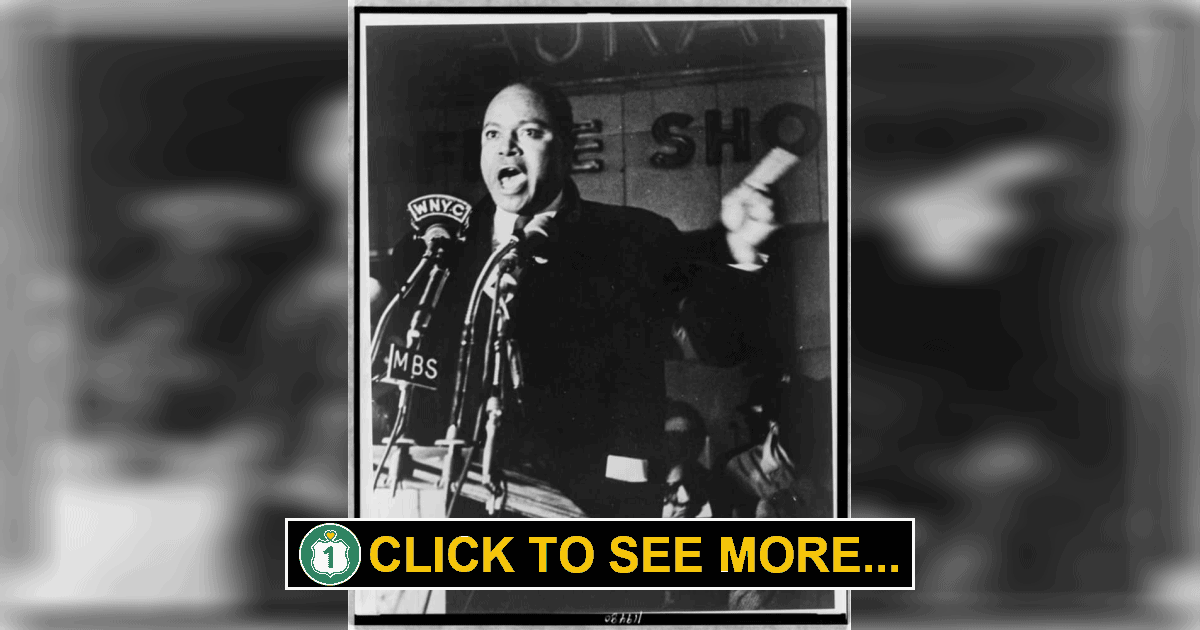
You’ve probably heard of the "Big Six." You know the names: Martin Luther King Jr., John Lewis, maybe A. Philip Randolph. But there is a massive gap in the public memory of the American Civil Rights Movement, and it's shaped like James Leonard Farmer Jr. Honestly, it’s a bit of a tragedy that his name isn't as household as the others. He wasn't just a participant; he was the primary architect. While others were still debating the merits of sit-ins, Farmer was already organizing them. By the time the 1960s rolled around, he had been practicing nonviolent resistance for nearly two decades. He was the guy who basically looked at the Jim Crow South and decided to physically break it using nothing but bus tickets and raw courage.
The Prodigy from Marshall
James Leonard Farmer Jr. was born in 1920 in Marshall, Texas. He was a brainiac. Truly. He skipped grades like they were optional, enrolling at Wiley College at just 14 years old.
His father, James Farmer Sr., was a force of nature—a Ph.D. from Boston University and a Methodist minister who commanded respect even in the heart of the segregated South. But seeing his father, a man of such immense intellect, forced to navigate the humiliations of "separate but equal" left a mark on young James.
There’s this one story he often told. He was ten. He went with his dad to the train station to get a ticket for a relative. The elder Farmer had to essentially lie and use a "refined" persona just to secure a Pullman car reservation. James was crushed. He saw the "great man" he looked up to having to play a role just to be treated like a human. That was the spark.
At Wiley, he joined the legendary debate team coached by Melvin B. Tolson. If you’ve seen the movie The Great Debaters, you know the vibe. This wasn't just about winning arguments; it was about weaponizing logic against oppression.
The Birth of CORE and the First Sit-In
Most people think sit-ins started in Greensboro in 1960.
They didn’t.
In 1942, James Leonard Farmer Jr. co-founded the Congress of Racial Equality (CORE) in Chicago. He was inspired by Howard Thurman’s teachings on Gandhi’s nonviolent resistance. But Farmer wasn't a theorist; he was a man of action. That same year, he and a small group of interracial activists walked into Jack Spratt Coffee House in Chicago.
They sat down. They asked for service. They were refused.
They stayed.
This was 18 years before the Greensboro Four. Farmer was pioneering the very tactics that would later define the movement. He understood early on that legal victories in courtrooms were useless if the "man on the street" didn't physically occupy the space he was being denied.
The Freedom Rides: A Gamble with Death
If you want to know what real bravery looks like, look at 1961. Farmer organized the Freedom Rides. The goal was simple but terrifying: ride Greyhound and Trailways buses from Washington, D.C., into the Deep South to challenge the non-enforcement of Supreme Court rulings that declared segregated interstate travel unconstitutional.
He knew it would be violent. He didn't sugarcoat it.
When the buses were firebombed in Anniston and the riders were beaten within an inch of their lives in Birmingham, the Kennedy administration tried to get them to stop. Robert Kennedy asked for a "cooling-off period."
Farmer’s response is legendary:
"We have been cooling off for 350 years. If we cool off any more, we will be in a deep freeze."
He didn't back down. He went to jail in Jackson, Mississippi, spending 40 days in the notorious Parchman State Penitentiary. While in prison, he and the other riders sang freedom songs so loud the guards couldn't drown them out.
Why He’s Often Forgotten
It’s complicated. Farmer was a complicated guy.
He wasn't always "on message" with the way history likes to package its heroes.
- The Nixon Connection: In 1969, Farmer did something that baffled his colleagues. He joined the Nixon administration as an Assistant Secretary in the Department of Health, Education, and Welfare. He wanted to work from the inside. He wanted to funnel resources into Black communities. It didn't work out great—he resigned in 1970, frustrated by the bureaucracy—but it muddied his "radical" image.
- The Chisholm Race: He ran for Congress in 1968 as a Liberal/Republican hybrid against Shirley Chisholm. He lost. This put him at odds with the emerging political power structures in New York.
- The Rise of Black Power: By the mid-60s, CORE was moving away from the nonviolence Farmer championed. Younger activists wanted "Black Power," a more militant stance. Farmer, the pacifist, felt like a man without a country. He resigned from CORE in 1966.
The Later Years and a Final Honor
Later in life, diabetes took a heavy toll. He lost his sight. He lost his legs.
But he never lost his voice.
He moved to Fredericksburg, Virginia, and became a professor at Mary Washington College (now the University of Mary Washington). Students there talk about him like a legend. He didn't just teach history; he was history. He’d sit in his chair, eyes failing, and recount the day he almost got lynched in Louisiana in 1963 (he had to hide in a hearse to escape a mob).
In 1998, President Bill Clinton finally gave him the Presidential Medal of Freedom. It was long overdue.
He died a year later, in 1999.
What Most People Get Wrong
The biggest misconception is that James Leonard Farmer Jr. was just a "lieutenant" of MLK.
Wrong.
He was a peer. Often, he was the one pushing King to be more aggressive with direct action. While the NAACP was focusing on the courts, Farmer was focusing on the pavement. He believed that the only way to change a person's mind was to make it impossible for them to ignore your presence.
He also wasn't just about "race." He was a pacifist to his core. During World War II, he was a conscientious objector. He believed violence was a cycle that only produced more violence. That’s a hard pill to swallow when people are throwing bricks at your head, but he lived it.
Actionable Insights from Farmer's Life
You can actually learn a lot from how Farmer operated. It wasn't just about shouting; it was about strategy.
- Direct Action Works: If you want change in your community or workplace, "asking" often isn't enough. You have to create a situation where the status quo is more uncomfortable than the change.
- Coalition Building: CORE was interracial from day one. Farmer knew you couldn't dismantle a system of oppression without allies inside and outside that system.
- The Power of the "Jail-In": He taught the world that you can turn a punishment into a protest. By refusing to pay bail, the Freedom Riders filled the jails and broke the local justice systems.
- Intellectual Rigor: He didn't just protest; he studied. He knew the law. He knew the philosophy. He was always the smartest person in the room, which made him dangerous to the establishment.
To truly honor the legacy of James Leonard Farmer Jr., you should look into the James Farmer Multicultural Center at UMW or read his autobiography, Lay Bare the Heart. It’s a raw, honest look at a man who gave everything—his health, his career, and nearly his life—to ensure that a bus ride was just a bus ride.
Next Steps for You
- Visit a Civil Rights Landmark: If you're near Marshall, Texas, or Jackson, Mississippi, go see the markers. It hits differently when you're standing where it happened.
- Study Nonviolent Conflict Resolution: It’s a skill. Farmer didn't just "not fight"; he used nonviolence as a weapon. There are modern workshops based on his and Gandhi’s principles.
- Support Grassroots Organizing: Farmer believed in the power of "regular people" over "experts." Find a local cause and get involved at the ground level.