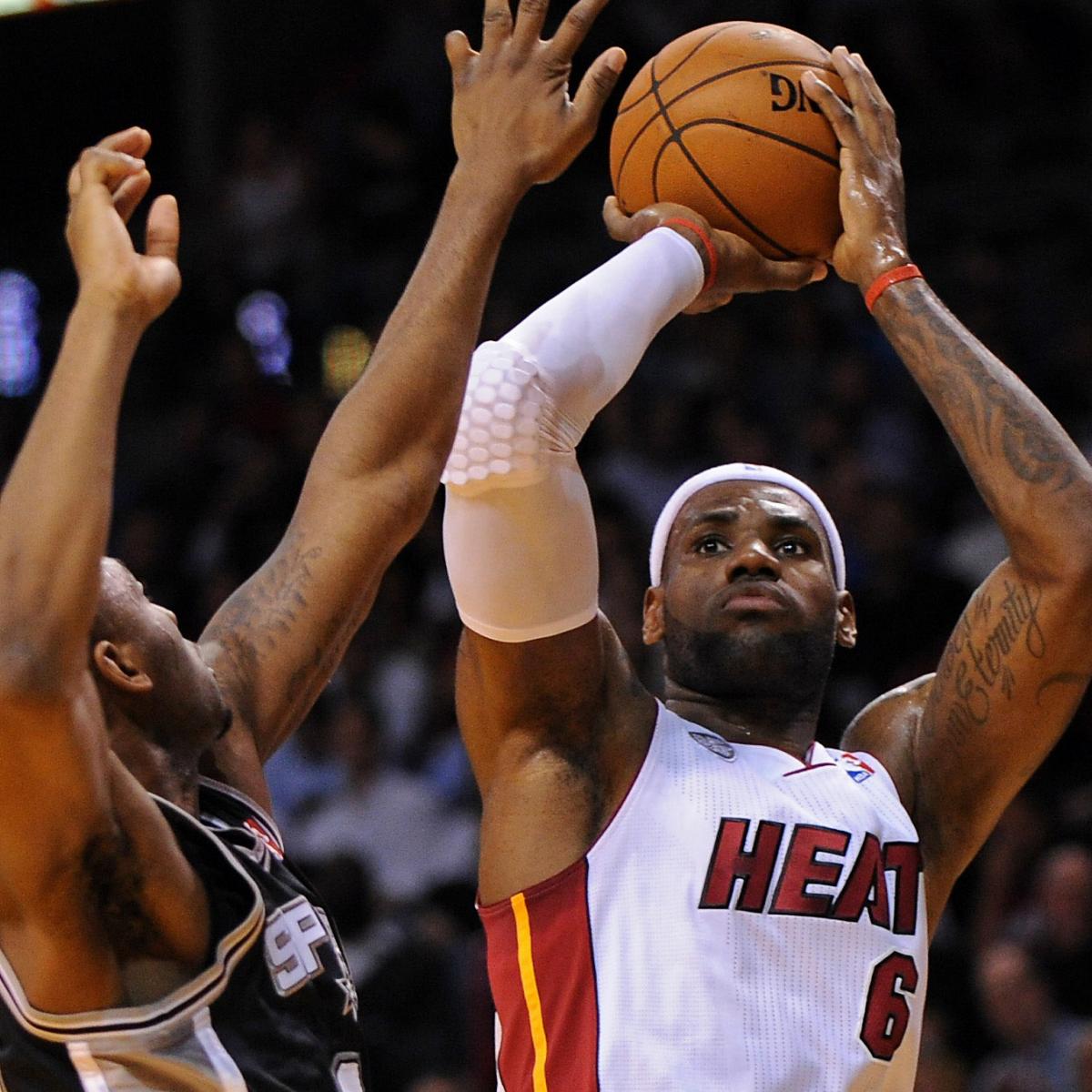
The air in the American Airlines Arena on June 20, 2013, was thick. It wasn't just the South Florida humidity. It was the weight of a legacy that felt like it was hanging by a single, fraying thread. Everyone remembers the shot from Game 6—Ray Allen’s corner three that basically defied the laws of physics and probability. But people forget that Game 6 didn’t win the title. It just bought the Miami Heat a chance to fight. NBA 2013 Finals Game 7 was the actual battlefield where the Miami Heat and San Antonio Spurs settled the score, and honestly, it remains one of the most technically perfect basketball games ever played.
People usually talk about LeBron James in terms of "The Block" in 2016 or the young phenom days in Cleveland. But Game 7 in 2013? That was his masterpiece of psychological warfare. The Spurs had a plan. Gregg Popovich, a genius by any standard, dared LeBron to shoot. They packed the paint. They dared him to be a perimeter threat. And for 48 minutes, LeBron James dismantled the greatest dynasty of the modern era by doing exactly what they thought he couldn't.
The Psychological Chess Match of the First Half
The narrative heading into the night was simple: the Spurs were old, and the Heat were lucky. Tim Duncan was 37 but playing like he was 27. Tony Parker’s hamstring was holding together with tape and prayers. On the other side, Dwyane Wade’s knees were "creaky," to put it mildly. He was getting treatment around the clock. Yet, when the ball tipped for NBA 2013 Finals Game 7, none of that mattered.
The Spurs' strategy was disrespectful. That’s the only word for it. Kawhi Leonard and Boris Diaw would sag off LeBron, sometimes by five or six feet. They were essentially telling the best player in the world that he wasn't a good enough shooter to beat them. It worked for a while. The game was ugly early on. Gritty. Neither team could find a rhythm. It was a 18-16 first quarter. In a modern NBA where teams score 40 in a quarter routinely, this felt like a throwback to the 90s.
Wade was the one who kept Miami afloat early. He hit these difficult, contested mid-range jumpers that shouldn't have gone in. He finished with 23 points and 10 rebounds. People forget how vital he was because LeBron’s stat line eventually exploded, but without "Flash" turning back the clock in the first half, the Heat would have been buried.
The Moment the Spurs' Strategy Backfired
By the third quarter, something shifted. You could see it in LeBron’s eyes. He stopped hesitating. Every time the Spurs gave him space, he stepped into a rhythm jumper. Swish. Next possession, same thing. Swish. He was 5-of-10 from three-point range. If you give a superstar that many practice-level looks, eventually the hoop starts to look like an ocean.
But it wasn't just LeBron. Shane Battier, who had been struggling the entire series, suddenly couldn't miss. He went 6-for-8 from deep. It was one of those "X-factor" performances that defines championships. Every time San Antonio tried to double-team or collapse the paint, the ball found Battier in the corner. It was a clinic in spacing and trust.
Why NBA 2013 Finals Game 7 Was Tim Duncan’s Heartbreak
We have to talk about Tim Duncan. Because if you want to understand the gravity of this game, you have to look at the miss. Late in the fourth quarter, with the Spurs trailing by two, Duncan had Shane Battier pinned under the rim. It was a mismatch. Duncan is one of the greatest power forwards to ever live. He took a hook shot. It missed. He got the rebound. He tried a put-back. It missed.
The image of Duncan slapping the floor in frustration on the other end is etched into NBA history. He knew. That was the moment. If he makes that, we might be talking about a very different outcome. It shows you how thin the margins are at this level. One inch of rim can change a legacy.
LeBron then iced it. He hit a 19-footer over Kawhi Leonard with about 27 seconds left to put the Heat up by four. It was the ultimate "clutch" moment. No dunks, no flashy passes. Just a cold-blooded jump shot from a guy who had been told for years that he didn't have a "clutch gene."
The Statistical Reality
If you look at the box score, it’s a terrifying display of efficiency under pressure.
- LeBron James: 37 points, 12 rebounds, 4 assists.
- Dwyane Wade: 23 points, 10 rebounds.
- Shane Battier: 18 points (all from three).
- Tim Duncan: 24 points, 12 rebounds.
- Kawhi Leonard: 19 points, 16 rebounds.
The Spurs actually out-rebounded the Heat 43 to 36. Usually, when you lose the rebounding battle and the turnover battle is relatively even, you lose the game. But Miami shot 43.8% from three. In 2013, that was an insane clip for a Game 7.
What Most People Get Wrong About This Series
The biggest misconception is that the Heat "stole" this championship because of Ray Allen’s shot in Game 6. While that shot was the catalyst, NBA 2013 Finals Game 7 proved that Miami was the better team when pushed to the absolute limit. They didn't win on a fluke; they won because their best player evolved mid-game.
Another thing? Danny Green. He was the frontrunner for Finals MVP if the Spurs had won in five or six games. He set a record for most threes in a Finals series. But in Game 7? The Heat's defense, led by Erik Spoelstra’s adjustments, absolutely locked him down. He went 1-of-12 from the field. One for twelve. That is how you win a championship—by identifying the hottest hand on the other team and making their life a living hell.
The Legacy of the 2013 Title
This game was the peak of the "Big Three" era. It validated everything. If they had lost, the narrative would have been that they only won one title (2012) against a young, inexperienced OKC team. Winning this one, against a Hall of Fame core of Duncan, Parker, and Ginobili, gave that Heat team a different kind of legitimacy.
It also changed how we view LeBron. Before this game, the "book" on him was to force him to shoot. After he dropped 37 in a Game 7 while primarily scoring from the perimeter, that book was burned. He became a complete offensive weapon.
How to Analyze This Game Like a Pro
If you’re a basketball nerd or just someone who loves high-stakes drama, there are a few things you should look for when you re-watch the highlights of NBA 2013 Finals Game 7.
- Watch the defensive rotations. Erik Spoelstra had Chris Bosh playing a "blitzing" style on the pick-and-roll that was revolutionary at the time. It forced Tony Parker to give up the ball earlier than he wanted to.
- Look at the spacing. Notice how Miami used Ray Allen just as a decoy. Even when he wasn't shooting, the Spurs couldn't leave him, which opened up the lanes for LeBron and Wade.
- The Fatigue Factor. By the fourth quarter, you can see the players' legs start to go. Every shot is short. Every movement looks heavy. Except for LeBron. His conditioning was, and is, superhuman.
Taking Action: Lessons from the Hardwood
You don't have to be an NBA superstar to take something away from this game. It’s a case study in resilience and adaptation.
- Adapt or Die: The Spurs gave LeBron the jumper. He took it. In your own life, when a problem doesn't yield to your usual "drive to the rim" tactics, you have to be willing to change your approach.
- Ignore the Noise: The pressure on the Heat was astronomical. Media members were already writing the "End of the Era" columns. They blocked it out.
- Preparation Wins: Shane Battier wasn't "lucky" to hit six threes. He was in the gym every day, staying ready even when his minutes were cut earlier in the series.
To truly appreciate NBA 2013 Finals Game 7, you have to stop looking at it as just a basketball game. It was a 48-minute stress test. It pitted a legendary system against transcendent individual talent, and for one night in Miami, the talent found its own system. It remains the gold standard for what a championship finale should look like: no excuses, no tomorrow, just two heavyweights trading blows until one finally couldn't get back up.