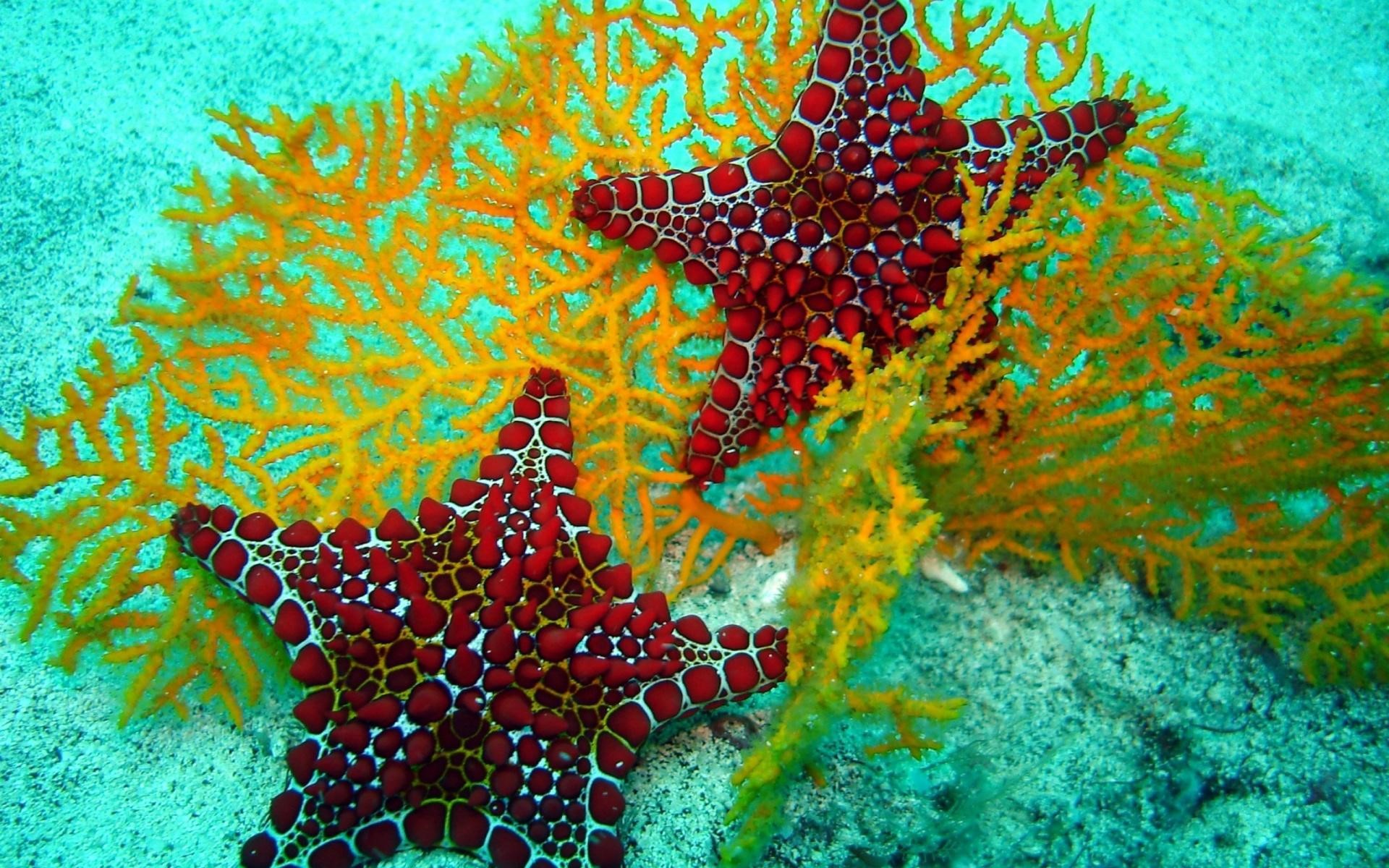
Most of us grew up drawing stars as five-pointed shapes. It’s the standard. When you head to the beach and flip over a rock in a tide pool, you expect to see that classic pentamerous symmetry. But nature doesn't always follow the rules we learned in kindergarten. Seeing a starfish with 8 legs can feel like finding a glitch in the Matrix, yet for several species, it’s just another Tuesday.
It’s weird, right? You’re looking at a creature that belongs to the class Asteroidea, and suddenly the math doesn't add up. Most sea stars have five arms. This is a biological trait they share with their cousins—sea urchins and sand dollars—collectively known as echinoderms. However, if you spend enough time diving or scouring the intertidal zones of the Pacific Northwest or the Great Barrier Reef, you’ll realize that "five" is more of a suggestion than a law.
The Species Where an 8-Legged Starfish Is Normal
Honestly, the most common reason you’ll see an starfish with 8 legs is simply that you've stumbled upon a species that naturally ignores the five-arm blueprint. Take the Luidia family, for instance. Luidia senegalensis, often called the Nine-armed Sea Star, frequently shows up with seven, eight, or nine arms. They are floppy, long, and look almost like a tangle of grey ribbons moving across the sandy bottom. If one gets nipped by a crab, it might be rocking eight arms for a few months while it regrows the ninth.
Then there’s the Crossaster genus. The Common Sun Star (Crossaster papposus) is a beast. It’s vibrant, usually orange or red with white bands, and it looks like a literal sunburst. These guys don’t even try to stick to five. They usually have anywhere from 8 to 14 arms. If you find one with exactly eight, it’s not a mutant; it’s just on the lower end of its natural spectrum.
You’ve also got the Solaster species. The Purple Sun Star (Solaster endeca) is a predator. It eats other starfish. Seriously. It crawls over its cousins and consumes them. While they often have 9 to 11 arms, seeing an 8-armed version is incredibly common in the colder waters of the North Atlantic and North Pacific.
Is It a Mutation or Just a Rough Week?
Sometimes a five-armed star ends up with eight because of a developmental hiccup. Just like some people are born with an extra finger (polydactyly), a sea star can undergo a "metamorphic error." During the transition from a free-swimming larva to a bottom-dwelling juvenile, the internal water vascular system—the hydraulic pumps they use to move—can split incorrectly. The result? A common Ochre Star (Pisaster ochraceus) that usually has five arms might suddenly sprout seven or eight.
It’s rare. But it happens.
Regeneration is the other big factor. Sea stars are the kings of the "comeback." If a gull tries to snatch a starfish and tears off a chunk, the starfish doesn't just die. It heals. Occasionally, the regeneration process goes into overdrive. Biologists have noted cases where a single lost arm is replaced by two "buds." This is called "supernumerary" regeneration. You might see a starfish that looks totally normal on one side, but on the other, it has a crowded mess of extra limbs.
The Physics of Moving With Eight Arms
You might think more legs equals more speed. It doesn't.
Sea stars move using thousands of tiny tube feet located on their underside. These feet work through hydraulic pressure. Each arm has a radial canal that feeds these feet. When you have a starfish with 8 legs, the central disk—the "brain" or hub of the animal—has to coordinate a much more complex hydraulic map.
A five-armed star moves with a leading arm and a trailing set. An eight-armed star, like the Luidia, is often much faster than its five-armed counterparts, but that’s usually because of the species' specific ecology, not just the arm count. These species often live in environments with shifting sands where they need to bury themselves quickly to avoid predators or drying out during low tide.
Why We Care About the Count
Researchers like Christopher Mah, a world-renowned expert on sea stars at the Smithsonian Institution, have spent decades cataloging these variations. Why does it matter if a star has five, eight, or forty arms (like the Crown-of-Thorns)?
It's about surface area.
More arms mean more tube feet. More tube feet mean a stronger grip. If you’re a Sun Star living in a high-current area, having eight or ten arms gives you a significant advantage when clinging to a rock compared to a wimpy five-armed neighbor. It also increases the surface area for respiratory exchange. Sea stars "breathe" through their skin and those tiny tube feet. More limbs basically mean a bigger set of lungs.
Spotting One Yourself: Where to Look
If you’re obsessed with finding an starfish with 8 legs, don’t look on a tropical beach with white sand. You want the "rough" spots.
- The Salish Sea (Washington/BC): This is the holy grail for sun stars. Look for Solaster stimpsoni.
- The Gulf of Mexico: Check the sandy flats for Luidia clathrata. While usually five-armed, the genus is famous for limb-count weirdness.
- The UK Coastline: The Common Sun Star is a frequent sight in deeper tide pools in Scotland and Northern England.
Actionable Steps for the Amateur Naturalist
If you find a starfish that doesn't fit the five-arm mold, don't just poke it and walk away. There are actually things you can do to help marine biology.
Document the underside. Most people take a photo of the top. That’s fine for Instagram, but scientists need to see the "oral" side. This shows how the arms connect to the central disk. It tells them if the eight arms are a natural growth or a result of a weird regeneration event.
Check for Sea Star Wasting Syndrome. If the 8-legged star looks "deflated" or has white lesions, it might be sick. This disease has decimated populations along the Pacific coast. You can report sightings to organizations like MARINe.
Measure the Central Disk. The ratio of the arm length to the disk diameter is a huge clue for species identification. If the disk is huge and the eight arms are short, you’re likely looking at a cushion star variant. If the arms are long and spindly, it’s probably a Luidia.
Leave it in the water. It sounds obvious, but starfish can’t breathe air. Taking it out for a "cool photo" stresses the hydraulic system. If you must move it to see the legs, keep it submerged in a tide pool.
Seeing an starfish with 8 legs is a reminder that biology is messy. It’s a beautiful departure from the symmetry we expect. Whether it’s a Crossaster doing its natural thing or a Pisaster that survived a predator attack, these multi-armed wonders are proof that the ocean doesn't care about our rules for what a "star" should look like.