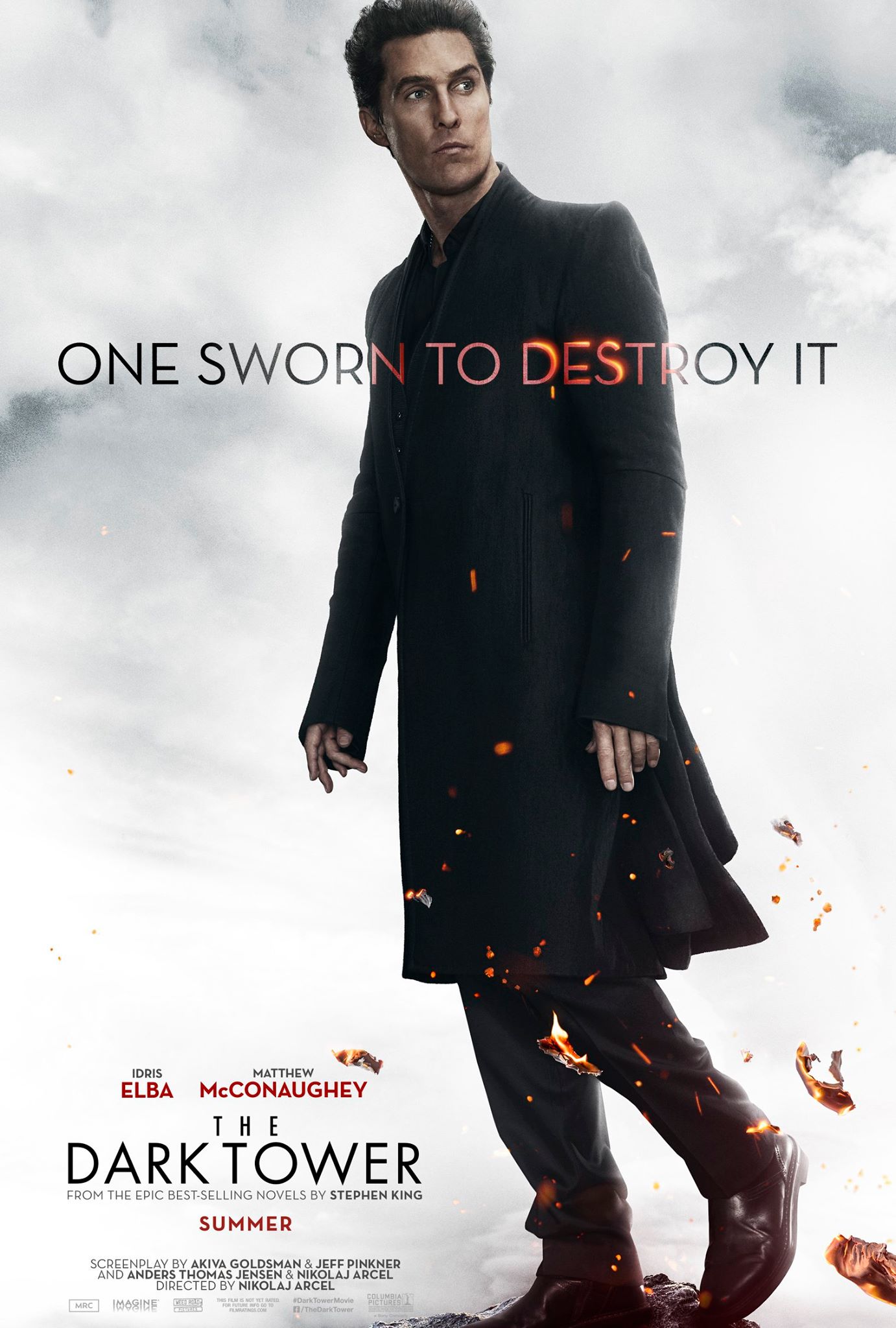
It was supposed to be the Lord of the Rings for the "weird fiction" crowd. Fans waited decades for the Gunslinger to walk onto a screen, and when it finally happened in 2017, the thud was audible. Honestly, it was heartbreaking. If you've read the eight-book saga, you know it's a sprawling, multi-dimensional epic that blends spaghetti westerns with Arthurian legend and meta-fictional cosmic horror. Then we got a 95-minute movie.
Stephen King on The Dark Tower movie has always been a complicated subject because the "Master of Horror" is notoriously gracious—sometimes to a fault—about adaptations of his work. He isn't Alan Moore. He doesn't disown things just for existing. But with The Dark Tower, even King had to admit the square peg didn't fit the round hole. The movie tried to condense 4,000 pages of lore into a brisk PG-13 action flick. It didn't work.
The Rating Problem That Hamstrung the Gunslinger
One of the biggest hurdles was the rating. You can't really do Roland Deschain justice without the grit. King’s books are bloody, profane, and deeply unsettling. When Sony and MRC decided to aim for a PG-13 rating, they effectively neutered the source material.
King spoke about this openly after the dust settled. He pointed out that the decision to go for a "mass market" rating was likely a primary driver of the film’s lukewarm reception. Hardcore fans wanted the visceral, R-rated intensity of the "The Gunslinger" (the first book), where Roland wipes out an entire town. Instead, we got a sanitized version. It felt safe. The Dark Tower should never feel safe.
The author mentioned in interviews with Vulture and Entertainment Weekly that the creative team faced a massive challenge in trying to figure out how to start the series. Do you start with the slow, philosophical journey through the desert? Or do you jump into the middle of the action? They chose the latter, framing the story through the eyes of Jake Chambers. It turned a story about a weary, obsessed knight into a "chosen boy" narrative we've seen a thousand times.
Idris Elba and the "Tower" Logic
If there was one bright spot that King stood by—and still stands by—it was the casting. Idris Elba as Roland Deschain was a point of contention for a certain subset of the internet, but King shut that down fast. He always maintained that Roland’s race was secondary to his "reach" and his "character." For King, Elba captured the iron-willed, world-weary soul of the character perfectly.
And he was right. Elba was great. Matthew McConaughey as Walter (The Man in Black) was also inspired casting on paper, even if the script gave him some pretty cheesy dialogue to chew on.
But great actors can't save a script that doesn't know what it wants to be. Is it a sequel? Is it a reboot? The movie tried to be a "continuation" of the books, utilizing the "Horn of Eld" as a narrative reset button. King liked this idea. He actually tweeted out a photo of the Horn before the movie released, signaling to fans that this was the "final time around" for Roland. It was a clever way to justify the changes, but for casual viewers who hadn't read the books, it just felt like a generic fantasy movie with no stakes.
The 95-Minute Execution
The runtime was the real killer. It's almost funny when you think about it. You have a series that spans several lifetimes and multiple realities, and the studio gives it less time than a standard romantic comedy.
King noted that the attempt to make the story "accessible" was probably the biggest mistake. When you try to please everyone, you often end up pleasing no one. The die-hard fans felt betrayed by the lack of "The Drawing of the Three" characters like Eddie and Detta/Odetta. The general audience was just confused about why a cowboy was fighting a wizard in a modern-day New York City basement.
Why King Stays Positive
You might wonder why Stephen King doesn't just blast the movie. He's been critical of Kubrick’s The Shining for years, after all. The difference is intent and respect. King felt that the filmmakers on The Dark Tower actually loved the books; they just got caught in "development hell" and studio interference.
The movie was stuck in limbo for over a decade. At one point, J.J. Abrams was attached. Then Ron Howard was going to do a massive trilogy with a TV series bridge in between (which honestly would have been the right way to do it). By the time Nikolaj Arcel directed it, the budget had been squeezed and the vision had been compromised. King knows how the "sausage is made" in Hollywood. He tends to be supportive of the people trying to climb the mountain, even if they slip and fall halfway up.
The Future: Mike Flanagan and the Redemption Arc
The conversation around Stephen King on The Dark Tower movie has shifted recently because the rights have moved. The movie is now a footnote. The real excitement lies with Mike Flanagan.
Flanagan, the mind behind The Haunting of Hill House and Midnight Mass, has secured the rights to the series. He’s a King superfan. He’s already proven he can adapt "unfilmable" King books with Gerald’s Game and Doctor Sleep. King has been very vocal about his support for Flanagan, basically giving him the keys to the kingdom.
This is what fans have been waiting for: a long-form television adaptation. The "Tower" is too big for a movie. It needs ten hours a season to breathe. It needs the weirdness. It needs the Lobstrosities. It needs the meta-commentary where the characters eventually meet Stephen King himself.
The 2017 film taught the industry a valuable lesson. You cannot "streamline" King’s magnum opus. You have to lean into the sprawl. You have to be willing to be weird.
What to Do Now if You’re a Fan
If you watched the movie and thought, "Is that it?", please don't let it ruin the series for you. The books are a transformative experience. They are messy, beautiful, and deeply moving in a way the film never even attempted to be.
Steps for the Aspiring Constant Reader:
- Ignore the film's timeline. If you’re starting the books, forget everything you saw in the movie. The movie is a weird "alt-world" version that doesn't represent the heart of the story.
- Start with "The Gunslinger" (Revised Edition). It’s short. It’s dry. It’s strange. But by the time you reach the end of the second book, The Drawing of the Three, you will be hooked.
- Track Mike Flanagan’s progress. He’s currently developing the pilot script. This is the version that will likely follow the books faithfully, starting with the iconic line: "The man in black fled across the desert, and the gunslinger followed."
- Look for the "King-verse" connections. Part of the fun of The Dark Tower is seeing how it connects to The Stand, IT, and Salem’s Lot. The movie touched on this with a few "Easter eggs," but the books make these connections vital to the plot.
The Dark Tower is still standing. The 2017 movie was just a brief, foggy glimpse of it from a very long distance. The real journey is still waiting to be told properly on screen. Keep your eyes on Flanagan, keep your heart on the books, and remember: there are other worlds than these.
Actionable Insight: For the most authentic experience, seek out the Marvel/Gallery 13 graphic novel adaptations of The Dark Tower. They cover the backstory of Roland (The Fall of Gilead) far better than the film ever could and were overseen by King's long-time research assistant, Robin Furth. If you want to understand the lore without reading 8,000 pages immediately, start there.