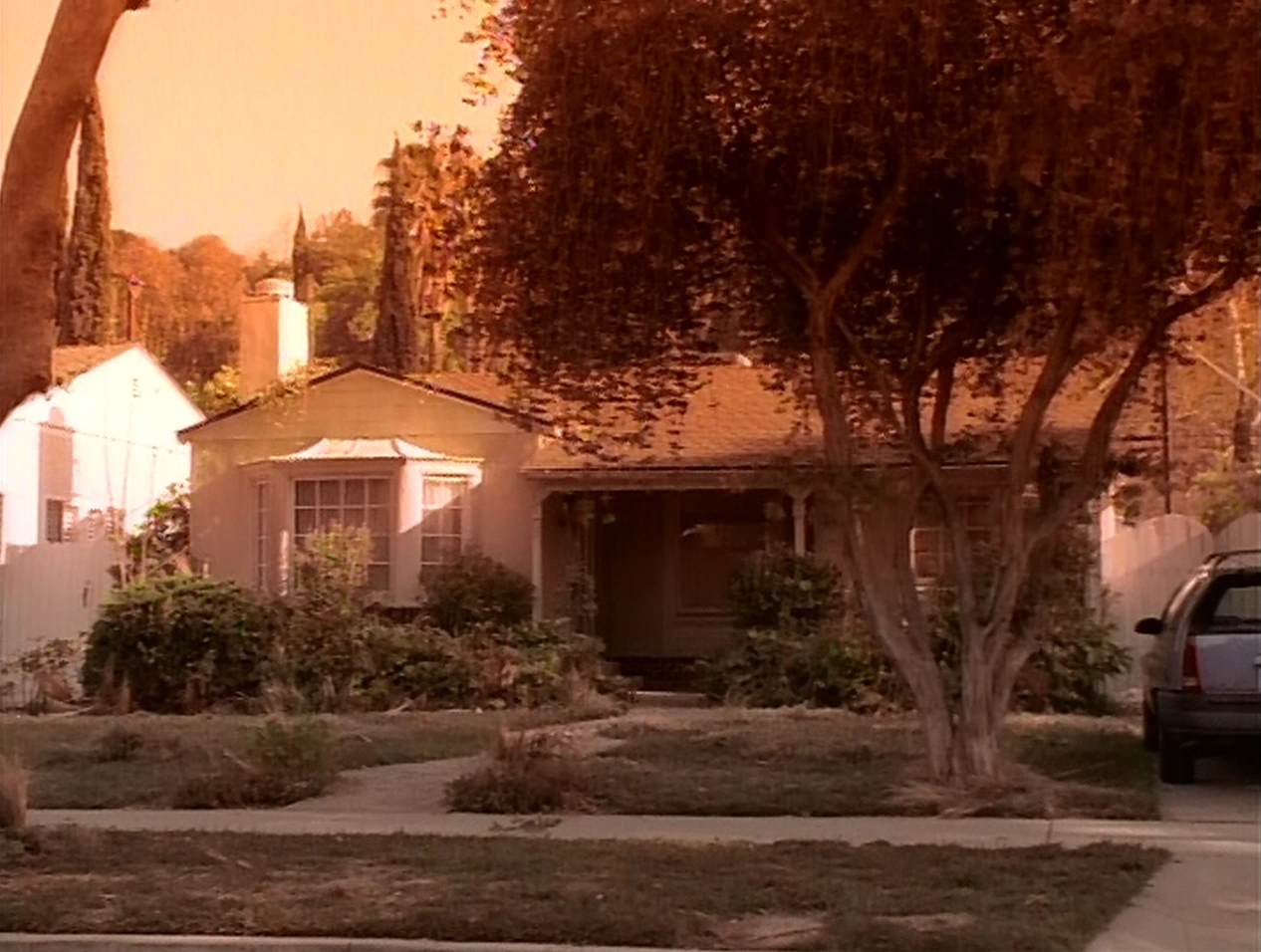
You know that feeling when you're watching a show and suddenly realize the hallway doesn't actually lead anywhere? That's the vibe of the Wilkerson residence. For seven seasons, we watched the most relatable, dysfunctional family on television scream their way through a house that felt as cramped and stressed as the characters living inside it. But if you actually sit down to map out the Malcolm in the Middle house layout, you start to realize it’s a masterpiece of set design specifically engineered to feel like a pressure cooker.
The house at 12334 Cantura Street in Studio City, California, was the exterior face of the show. It was a real house. However, the interior was a series of sets at CBS Studio Center. This is where things get weird. Stage sets often prioritize camera angles over architectural logic, and the Wilkerson home is the king of "wait, how does that work?" It’s a small, single-story ranch-style home that somehow manages to house four (later five) growing boys, two parents on the verge of a breakdown, and enough clutter to fill a landfill.
The Living Room and the "Wall of Doors"
Walk through the front door and you're immediately in the living room. It’s small. Honestly, it’s tiny for a family that big. This is the central hub of the Malcolm in the Middle house layout, and it functions like a frantic intersection. To your left is the dining area and kitchen. Directly ahead is the hallway that leads to the bedrooms.
What’s interesting is the way the camera moves through this space. The furniture is always pushed a bit too close together. There is never enough "empty" floor space. This was a deliberate choice by the production designers. They wanted the viewer to feel the claustrophobia. In many 2000s sitcoms, the living rooms were massive—think Full House or Friends—but Malcolm’s house felt like a place where you’d constantly be stubbing your toe on a stray sneaker or a discarded textbook.
The walls are covered in wood paneling that hasn’t been updated since the 70s. It’s dark. It absorbs light. It makes the space feel even more compressed. When Lois is screaming from the kitchen, the sound carries perfectly because there are no barriers. The open-concept transition between the living room and the kitchen/dining area means there is no escape from the family's proximity.
The Kitchen: The Heart of the Mess
The kitchen in the Malcolm in the Middle house layout is arguably the most recognizable room in the series. It’s an L-shaped setup with a round dining table that serves as the site for 90% of the family’s arguments.
The back door is located right off the kitchen area. This is a crucial piece of the floor plan because it’s the primary exit for the boys when they’re trying to sneak out or avoid a confrontation. Behind the kitchen, there’s a small laundry/mudroom area. This is where the clutter reaches its peak. Piles of laundry are a permanent fixture of the decor. It’s one of the few sets in TV history that actually looks lived-in. Usually, TV kitchens look like IKEA showrooms. This one looks like a war zone.
If you look closely at the cabinets, they’re rarely fully closed. There are papers stuck to the fridge with magnets that look like they’ve been there for a decade. The lighting is harsh. It’s fluorescent. It’s the kind of lighting that makes everyone look a little more tired and a little more desperate, which fits the show’s tone perfectly.
The Boys' Bedroom: A Physics Defying Space
This is where the Malcolm in the Middle house layout gets truly fascinating from a design perspective. Malcolm, Reese, and Dewey (and later Jamie) share a single bedroom. It is packed.
You have the bunk beds and the single bed. The desk is shoved into a corner. There is almost zero walking room. When the boys are fighting, which is always, the lack of space forces them into physical contact. You can't just walk away in this house; you have to climb over someone to leave the room.
- The beds are arranged in a way that blocks most of the floor.
- The closet is overflowing, often used as a plot device for hiding things.
- The window looks out onto the side yard, which becomes a frequent entry/exit point.
Architecturally, the bedroom is located down a narrow hallway to the right of the living room. Opposite the boys' room is the bathroom. This single bathroom is the source of endless conflict. A family of six sharing one bathroom is a recipe for disaster, and the layout emphasizes this by making the hallway a bottleneck. If someone is standing in the hall, no one else can pass. It’s a tactical nightmare.
Hal and Lois’s Master Bedroom
At the very end of the hallway is Hal and Lois’s room. It’s the only place in the house that even attempts to be a sanctuary, though it rarely succeeds. Compared to the chaos of the rest of the Malcolm in the Middle house layout, their room is relatively sparse. It’s still dated—think floral wallpaper and old-school lamps—but it feels like a different world.
Interestingly, the master bedroom is often where the "grown-up" problems are discussed, while the rest of the house belongs to the chaos of the kids. The placement at the end of the hall gives it a sense of being the "final boss" room. If you’re a kid and you’re called to the end of that hallway, you know you’re in trouble.
The Garage and the Secret "Everything Else" Space
We can’t talk about the Malcolm in the Middle house layout without mentioning the garage. In various episodes, the garage transforms. Sometimes it’s just a place for Hal’s hyper-fixations—like his speed-walking gear or his painting projects. Other times, it’s a storage locker for things they should have thrown away years ago.
The garage isn't directly connected to the interior of the house in the way modern suburban homes are. You usually see the characters entering it from the outside. This separation makes it Hal’s "man cave," even though it’s usually falling apart.
Then there’s the yard. The house sits on a decent-sized lot, but it’s mostly dirt and patches of dying grass. The "layout" of the exterior is just as important as the interior. The crawlspace under the house is a recurring location, used for hiding things or, in one memorable instance, discovering that the house was built over an old toxic waste site (or so they thought).
Why the Layout Matters for the Show’s Success
Most sitcom houses are aspirational. You watch The Brady Bunch or Modern Family and you think, "I'd like to live there." Nobody wants to live in the Malcolm house. The Malcolm in the Middle house layout was designed to be a character in itself—one that was tired, overworked, and failing.
The inconsistency of the floor plan actually helps the comedy. Because the sets were built for specific shots, the geography of the house can feel fluid. One moment a character is in the kitchen, and the next they are magically in the backyard. This fast-paced editing mirrors the frenetic energy of Malcolm’s life.
Real-life fans have tried to recreate the floor plan in games like The Sims or through architectural rendering software. They often run into the same problem: the house is bigger on the inside than it is on the outside. This is a common "Tardis" effect in TV. The exterior of the Cantura Street house is quite small, but the staged interior needs to accommodate a full film crew, lighting rigs, and boom mics.
The Fate of the Real House
If you went to see the house today, you wouldn't recognize it. The original 1936-built home was largely demolished and rebuilt shortly after the show ended. The new version is a modern, two-story luxury home that looks nothing like the Wilkerson residence.
It’s almost poetic. The house that represented the struggling middle class of the early 2000s was "gentrified" out of existence. But for fans, the Malcolm in the Middle house layout remains frozen in time—a messy, cramped, wood-paneled maze where the fridge is always making a weird noise and someone is always screaming in the hallway.
To understand the house is to understand the family. It wasn't just a building; it was a physical manifestation of their financial stress and their unbreakable bond. They were literally on top of each other, and while that caused constant friction, it also meant they could never truly drift apart.
Next Steps for TV Floor Plan Enthusiasts
If you want to dive deeper into the world of fictional architecture, your next move should be looking at the production design of Breaking Bad. It’s fascinating to compare the Wilkerson home with the White residence in Albuquerque. Bryan Cranston moved from one iconic house to another, and both used their layouts to tell a story about the family's socioeconomic status.
You can also look up "The Architecture of the Sitcom" by various set designers who explain how they use "forced perspective" and "swing sets" to make small spaces look deep on camera. Understanding these tricks makes re-watching Malcolm in the Middle a completely different experience. You start noticing where the cameras had to be placed and why certain rooms are never shown from specific angles. It’s a masterclass in making a TV set feel like a real, crumbling home.