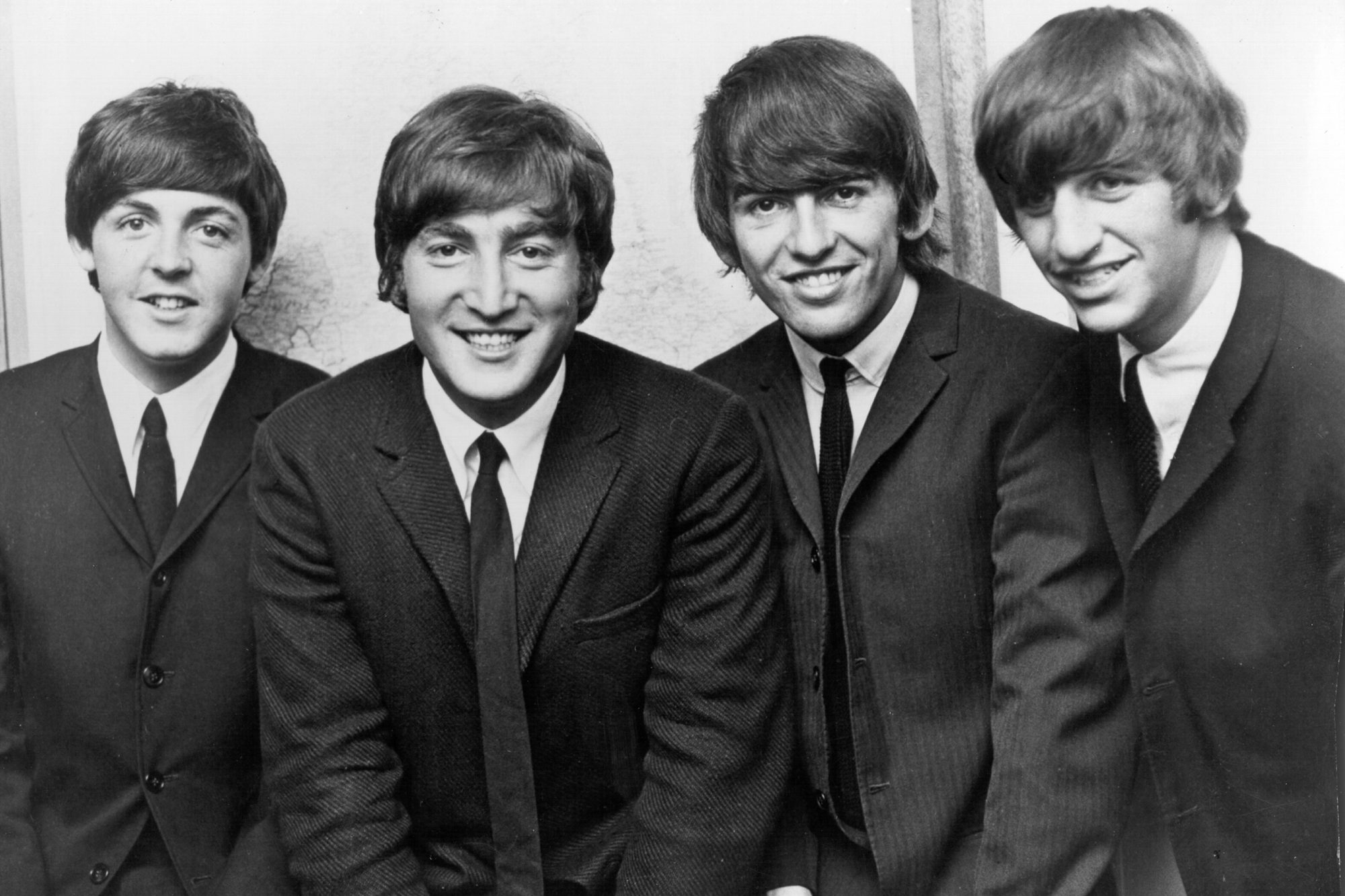
You know, it’s funny. When people talk about the members in the Beatles, they usually treat them like a four-headed monster. One singular organism that just happened to have eight arms and a really good haircut. But if you actually sit down and listen—I mean really listen to the isolated tracks or read the messy session notes from Abbey Road—you realize they were four incredibly different, often clashing, personalities who just happened to be stuck in a pressure cooker.
John was the grit. Paul was the polish. George was the soul. Ringo was the heart.
Most people think it started with the "Fab Four" we see on the Ed Sullivan Show, but the lineup was a revolving door for years. You had Stuart Sutcliffe playing bass because he was cool, not because he could actually play. You had Pete Best on drums before George Martin basically told the band he wasn't up to snuff for the studio. By the time they hit the big leagues, the members in the Beatles were solidified, but the internal roles were constantly shifting. It wasn't just "John and Paul write everything." It was way more chaotic than that.
The Power Struggle Between Lennon and McCartney
Let's be real: the relationship between John Lennon and Paul McCartney is the most analyzed bromance in history. They had this "Lennon-McCartney" credit on almost everything, but by 1967, they were barely writing in the same room.
John was the intellectual rebel. He wanted to push boundaries, get weird with feedback on "I Feel Fine," and throw in nonsensical wordplay like in "I Am the Walrus" just to confuse the critics. He was cynical. He was loud. Paul, on the other hand, was the ultimate melodic craftsman. The guy could roll out of bed and write "Yesterday" (which he actually did). Paul was the one who kept the band going after their manager Brian Epstein died in 1967. He was the "workhorse."
But that drive is exactly what started the friction. Imagine being George Harrison, a world-class songwriter in your own right, and having Paul tell you exactly which notes to play on your guitar. It happened during the Let It Be sessions. You can see it in the Get Back documentary—the tension is so thick you could cut it with a Rickenbacker. Paul wanted perfection; John wanted honesty. It's a miracle they lasted as long as they did.
George Harrison: The "Quiet" One Who Wasn't That Quiet
Calling George Harrison the "Quiet Beatle" is kinda lazy. Sure, he wasn't as loud as John or as PR-friendly as Paul, but the guy was a powerhouse. For years, he was limited to maybe two songs per album. Can you imagine having "While My Guitar Gently Weeps" or "Something" in your pocket and being told, "Sorry, we need to make room for another Maxwell's Silver Hammer"?
George brought the Eastern influence. He's the one who sat on the floor with Ravi Shankar and brought the sitar into Western pop. He wasn't just a guitar player; he was the band's spiritual compass. By the time the members in the Beatles split, George had so much backlogged material that his first solo project, All Things Must Pass, had to be a triple album.
Think about that. A triple album of songs that weren't "good enough" for the Beatles. That tells you everything you need to know about the level of talent we're talking about here.
Ringo Starr: The Human Metronome
People love to joke about Ringo. Even that fake quote attributed to John Lennon—"Ringo wasn't even the best drummer in the Beatles"—is actually just a joke from a British comedian named Jasper Carrott. In reality, John, Paul, and George adored Ringo’s playing.
Why? Because he never missed a beat.
Ringo wasn't a flashy drummer. He didn't do long, boring solos. He played for the song. If you listen to "Rain" or "Come Together," the drum parts are incredibly inventive. He’s a "left-handed drummer playing a right-handed kit," which gave his fills this weird, slightly off-kilter timing that nobody else could replicate. He was the glue. When the other three were screaming at each other in the studio, Ringo was the guy everyone still liked. He was the first to "quit" the band during the White Album sessions because he felt unappreciated, and the other three sent him telegrams and covered his drum kit in flowers to get him back.
Why the Lineup Worked (and Why It Broke)
The chemistry of the members in the Beatles was a fluke of history.
- The Early Days: They spent thousands of hours playing 8-hour sets in Hamburg. That’s where they learned how to be a unit.
- The Studio Years: Once they stopped touring in 1966, they became laboratory scientists.
- The End: Personalities grew too big for the room. Yoko Ono’s presence is often blamed, but honestly? They were just four grown men who had been living in each other's pockets for a decade. They wanted to be individuals again.
The tragedy—or maybe the beauty—is that they never reunited. They left the legacy untouched. When John was killed in 1980, the possibility of the original members in the Beatles ever sharing a stage again vanished.
What We Can Learn From the Fab Four
If you’re looking at the Beatles as a model for teamwork or creativity, there are some pretty blunt lessons here.
First, friction is productive. The "white heat" of the Lennon-McCartney rivalry produced better music than either of them usually did alone. They checked each other’s worst impulses. Paul stopped John from being too abstract; John stopped Paul from being too "granny music" (John’s words, not mine).
Second, roles evolve. You have to let people grow. If the band had survived into the 70s, they would have had to give George Harrison equal footing. They didn't, and that’s a big reason why it ended.
Next Steps for the Superfan:
- Listen to the "Naked" Versions: Grab the Let It Be... Naked album. It strips away the heavy production and lets you hear the four members actually playing in a room.
- Watch the Get Back Documentary: It’s long, but it’s the only way to see the actual "work" of being a Beatle. The boredom, the smoking, the sudden flashes of genius.
- Track the Songwriting: Use a resource like Revolution in the Head by Ian MacDonald. It breaks down exactly who played what instrument on every single track. You’ll be surprised how often Paul played drums or George played bass.
The Beatles weren't a myth. They were just four guys from Liverpool who worked harder than anyone else and eventually got tired of the noise.