What would you do with a single bottle of liquid worth more than a luxury house in the suburbs? For most of us, wine is a grocery store afterthought or a $50 splurge for an anniversary. But in the stratospheric world of high-end collecting, a glass of fermented grape juice can cost more than a Ferrari.
Honestly, the numbers are kind of offensive.
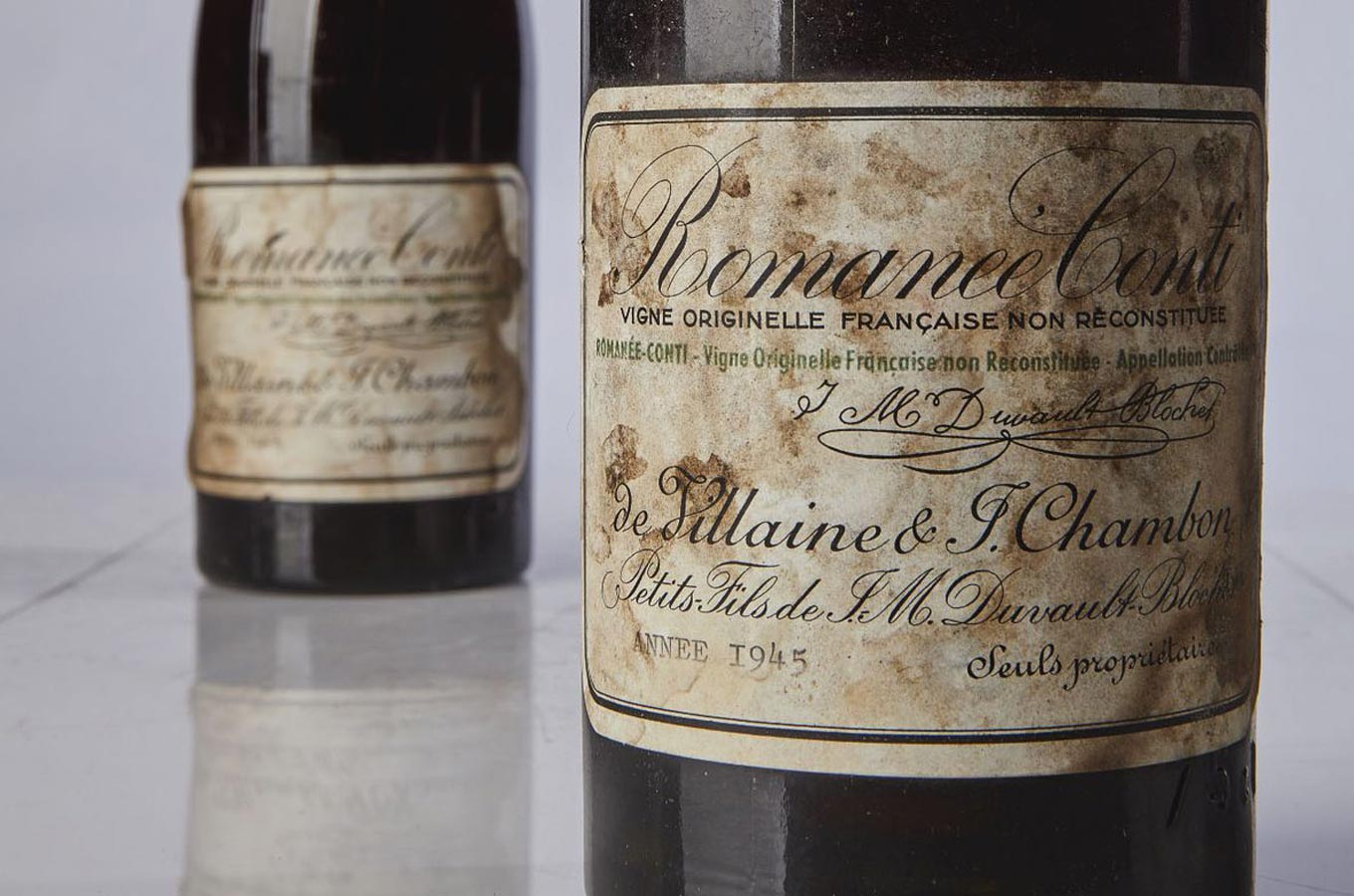
When people ask about the most expensive wine bottle, the answer depends on whether you're talking about the liquid itself, the size of the glass, or—increasingly—the digital assets attached to the cork. If you look at a standard 750ml bottle of red wine, the undisputed king is the 1945 Domaine de la Romanée-Conti (DRC). It sold at a Sotheby’s auction in New York for a brain-melting $558,000.
That is not a typo.
For half a million dollars, you get about five glasses of wine. That’s $111,600 per pour. One sip is basically a used Honda Civic.
Why the 1945 Romanée-Conti is the Holy Grail
You might be wondering why anyone would pay that much. Is it because it tastes like liquid gold? Maybe. But at this level, you aren't paying for flavor. You're paying for history and scarcity.
The 1945 vintage is often called the "unicorn" of the wine world. Here is why:
- The End of an Era: 1945 was the final year before the vineyard owners uprooted their legendary "vielle vignes" (old vines). These vines were ancient, but they were dying. The 1945 crop was the last gasp of those legendary roots.
- Post-War Scarcity: Production was tiny because, well, Europe was busy finishing World War II. Only about 600 bottles were ever produced.
- The Provenance: The record-breaking bottle came from the personal cellar of Robert Drouhin. In the wine world, knowing exactly where a bottle has been sitting for 80 years is worth a fortune.
If you find a 1945 DRC in a random basement, it’s probably a fake. The market is flooded with "super-fakes" because the profit margins for scammers are so high. But this particular bottle had a "perfect" history, which is why two collectors got into a bidding war that blew past the original $32,000 estimate.
It’s Not Just About Red Wine Anymore
While that 1945 Burgundy holds the record for a standard bottle, the "most expensive" title gets messy when you look at massive bottles or charity auctions.
Take The Setting Wines 2019 Glass Slipper Vineyard Cabernet Sauvignon. A 6-liter bottle (that’s a "Methuselah," or eight standard bottles) sold for $1 million at a charity auction in 2021.
Wait, $1 million?
Yes, but there is a catch. It was a charity event. People often overpay at these auctions because the money goes to a good cause and they get a tax write-off. In the "real" market, a standard bottle of that same wine costs about $180. It’s a great wine, but it’s not $1 million great.
The $2.5 Million Champagne Anomaly
If we want to get really technical, the highest price ever paid for a single "bottle" (even if it was a Magnum) happened in 2022. A bottle of Château Avenue Foch 2017 sold for $2.5 million.
This is where things get weird.
The buyers, Italian crypto investors Giovanni and Piero Buono, weren't just buying the bubbly. The bottle came with an NFT (Non-Fungible Token) that gave them the intellectual property rights to "Bored Ape Mutant" artwork featured on the label.
Essentially, they bought a piece of digital art that happened to come with a bottle of Champagne. The wine inside was a 2017 Premier Cru, which is nice, but you can usually find similar quality for about $100. This sale represents the "hype" era of the 2020s more than the actual value of the wine.
What Makes a Bottle Worth Six Figures?
If you're looking to start a collection—or just want to sound smart at a dinner party—there are basically three things that drive these prices into the stratosphere.
- Scarcity: If 10,000 people want a bottle and only 50 exist, the price is going to explode.
- Longevity: Most wine turns to vinegar after five years. Only a tiny fraction of wines (mostly from Bordeaux, Burgundy, and Napa) can actually improve over 50 or 100 years.
- The Score: Critics like Robert Parker or publications like Wine Spectator can make or break a vintage. A "100-point" score from a top critic acts like a multiplier on the price tag.
The White Wine Records
Don't ignore the whites. While reds usually grab the headlines, sweet wines like Château d'Yquem can age for centuries. An 1811 bottle of d'Yquem sold for about $117,000 back in 2011. Because it has such high sugar and acidity, it is technically still drinkable today.
Imagine drinking something that was bottled while Napoleon was still roaming around Europe. That’s the real appeal. You're drinking a time capsule.
How to Handle Your Own "Expensive" Finds
You probably won't find a 1945 DRC at a garage sale. But if you do happen to inherit some old bottles or decide to invest, keep these points in mind:
- Storage is everything: If a bottle has been sitting on top of a warm refrigerator for ten years, it’s worthless. Wine needs a cool, dark, humid place. Heat is the enemy.
- Documentation matters: Keep your receipts. If you buy a rare bottle, you need to be able to prove where it came from (the "provenance") if you ever want to sell it.
- Check the "Fill Level": If you look at an old bottle and the wine is down in the "shoulder" of the bottle instead of the neck, it means oxygen has gotten in. The wine is likely dead.
Building a cellar isn't just for billionaires. You can find "investment grade" wines for $100 to $300 that might double in value over a decade. It's a slow game. It's also a risky one, because you might just get tempted to drink your investment on a Friday night with a pizza.
To get started with high-value wine, your first move should be researching the "Blue Chip" producers. In Burgundy, that’s names like Leroy, Rousseau, and DRC. In Bordeaux, look for the "First Growths" like Lafite Rothschild, Latour, and Margaux. Understanding these names is the baseline for knowing why certain glass bottles are worth more than gold.
If you're serious about the value, check the Liv-ex (London International Vintners Exchange). It’s basically the stock market for wine. It’ll show you real-time price trends so you aren't relying on auction hype. Always remember that a wine is only worth what someone else is willing to pay for it on a Tuesday afternoon, not just what a headline says.
Stick to established auction houses like Sotheby’s or Christie’s if you’re buying at this level. They have experts who spend all day sniffing corks and looking at glass imperfections to spot fakes. If a deal looks too good to be true, especially for a "unicorn" vintage, it almost certainly is.