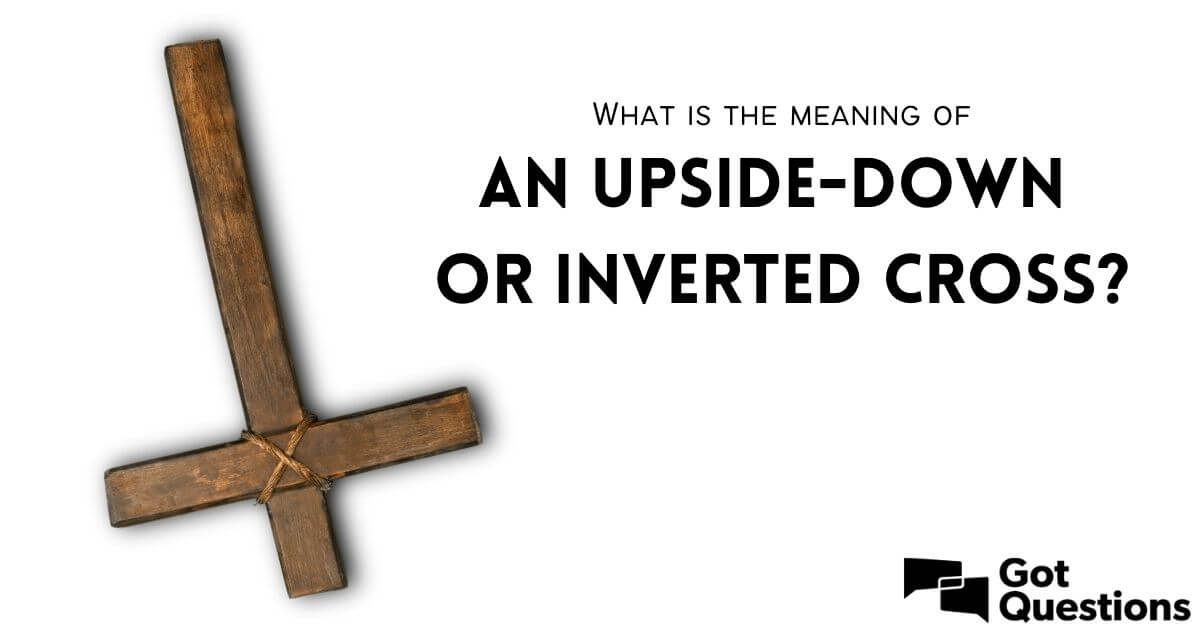
Walk into any Spencer’s Gifts or scroll through a "dark aesthetic" mood board on Pinterest, and you’ll see it. The inverted cross. It’s on t-shirts, etched into the foreheads of horror movie villains, and dangling from the ears of every teenager trying to ruin their parents' Thanksgiving. To the average person, the upside down cross satanic connection is a foregone conclusion. It is the universal shorthand for rebellion, the occult, and a big middle finger to organized religion.
But here is the thing. History is weird. Symbols are even weirder.
If you actually went back in time and showed an inverted cross to a medieval peasant, they wouldn’t scream and reach for holy water. They’d probably just nod and think about St. Peter. In a strange twist of cultural amnesia, one of the most significant symbols in the Catholic Church was hijacked by Hollywood and 1980s metal bands, turning a badge of extreme humility into a mascot for the Prince of Darkness.
The Cross of St. Peter: A History of Not Being Evil
You can't talk about the upside down cross satanic myth without talking about a guy named Simon Peter. According to early Christian tradition—specifically documented in the Acts of Peter around the late 2nd century—Peter was sentenced to death by the Romans under Emperor Nero.
He didn't think he was worthy.
When the guards came to nail him to the wood, Peter supposedly argued that he wasn't good enough to die in the same manner as Jesus Christ. He requested to be flipped. The Romans, being famously cruel, were happy to oblige. Thus, the Petrine Cross was born. For nearly two thousand years, this was a symbol of "The Rock" of the church. Even today, you can find the inverted cross carved into the back of the Pope’s chair in certain settings or featured in the architecture of the Vatican.
It represents the idea that humans are lower than the divine. It’s about subservience.
So, how did we get from "Humble Apostle" to "I worship the devil in my basement"?
The Shift Toward the Occult
Symbols don't have inherent meanings; they have the meanings we give them. The shift started small. In the 19th century, French occultist Éliphas Lévi—a name you’ll find in basically every serious book on Western esotericism—began writing about the inversion of symbols. For Lévi and his contemporaries, flipping a symbol meant reversing its power.
If a right-side-up cross represented the triumph of spirit over matter, then flipping it over meant the triumph of matter over spirit. It wasn’t necessarily "evil" in the way a cartoon villain is evil, but it was definitely "anti."
The 1960s and the Church of Satan
Then came Anton LaVey.
When LaVey founded the Church of Satan in 1966, he was a master of branding. He knew exactly how to push buttons. While the primary symbol of his organization was the Sigil of Baphomet (the goat head in the pentagram), the use of the inverted cross became a popular visual tool for his followers. It was easy. It was recognizable. It took a symbol that people held sacred and turned it on its head—literally.
This was the era of the "Satanic Panic." People were terrified. Parents saw an upside down cross satanic necklace and assumed their kid was sacrificing the neighbor's cat. In reality, most of the time, the people wearing it were just fans of Black Sabbath or Coven.
Hollywood’s Role in the Misunderstanding
Let’s be honest. Most people don’t get their theology from history books. They get it from the movies.
Films like The Exorcist (1973) and later, The Conjuring franchise, have done more to cement the upside down cross satanic link than any actual occultist ever could. In horror cinema, the inverted cross is a jump-scare in physical form. It’s used to signal that a space has been "corrupted."
Think about The Omen. Think about every possession movie where the crosses on the wall start slowly rotating until they’re upside down. It’s a visual cue for the audience: The devil is here. It’s effective cinematography. It’s also historically illiterate. But Hollywood doesn’t care about St. Peter; they care about ticket sales and atmosphere. By the time the 1990s rolled around, the "Cross of St. Peter" had been almost entirely erased from the public consciousness, replaced by the "Satanic Cross."
Why People Still Use It Today
Pop culture moves fast. These days, you see the symbol everywhere from high fashion runways to SoundCloud rapper aesthetics.
- Shock Value: It still works. Even in 2026, an inverted cross can make people uncomfortable.
- Atheistic Rebellion: Many people who wear it aren't "Satanists" in the sense that they believe in a literal devil. They’re usually just expressing their distaste for the church or traditional authority.
- The Metal Scene: From Deicide to Mayhem, the extreme metal community adopted the symbol decades ago as part of their "anti-Christian" imagery. For them, it’s about the aesthetic of darkness.
- Gothic Fashion: For some, it’s just a shape that looks cool with black leather and silver chains.
There is a certain irony in seeing a teenager wear an upside down cross satanic charm to annoy their Catholic grandmother, only for the grandmother to technically be wearing the same symbol (in spirit) as a devout follower of Peter.
The Nuance of Modern Satanism
If you talk to a member of The Satanic Temple (TST)—which is actually a non-theistic activist group—they’ll tell you they don’t really focus on the inverted cross much. They prefer the Baphomet or the Lupercal. To them, the inverted cross is a bit "cliché." It’s "Satanism 101."
Real occultists usually look for more complex symbols. The upside down cross satanic trope is largely a product of Christian anxiety and pop-culture marketing. It’s a shadow-version of Christianity, rather than its own distinct philosophy.
Spotting the Difference: St. Peter vs. Satanic Intent
How do you know which one you're looking at? Context is everything.
If you see an inverted cross in an old cathedral in Poland, it’s St. Peter. If you see it on the cover of a death metal album with blood dripping off the ends, it’s the upside down cross satanic version.
One is a symbol of "I am not worthy to be like God."
The other is a symbol of "I reject God entirely."
It’s the same geometry with two diametrically opposed hearts behind it.
What to Remember Next Time You See One
Don't freak out.
The world of symbols is messy. Just because someone has an inverted cross on their jacket doesn't mean they're part of some secret underground cabal. Usually, it just means they like horror movies or they’re trying to look "edgy" for their TikTok followers.
Honestly, the history of the symbol is way more interesting than the modern "scary" version. It’s a story of how a symbol of the deepest Christian humility was flipped—physically and metaphorically—into a symbol of the deepest rebellion.
Actionable Insights for the Curious:
- Check the Context: If you're traveling in Europe, look for the Petrine Cross in older churches. It’s a fun "I know something you don’t" fact to share with friends.
- Separate Art from Belief: Most use of the symbol in music and film is purely for the "vibe." Don't mistake a stylistic choice for a theological statement.
- Research the Source: If you’re interested in the "darker" side of symbols, look into the 19th-century French occultists like Éliphas Lévi rather than just relying on movie tropes.
- Avoid the Panic: Understanding that the symbol has a dual history helps de-escalate the "Satanic Panic" mindset that still pops up in certain communities.
The inverted cross is a mirror. What you see in it usually says more about your own background and fears than it does about the person wearing it. It’s a fascinating piece of visual history that has survived nearly 2,000 years, even if it had to change its identity along the way to stay relevant.