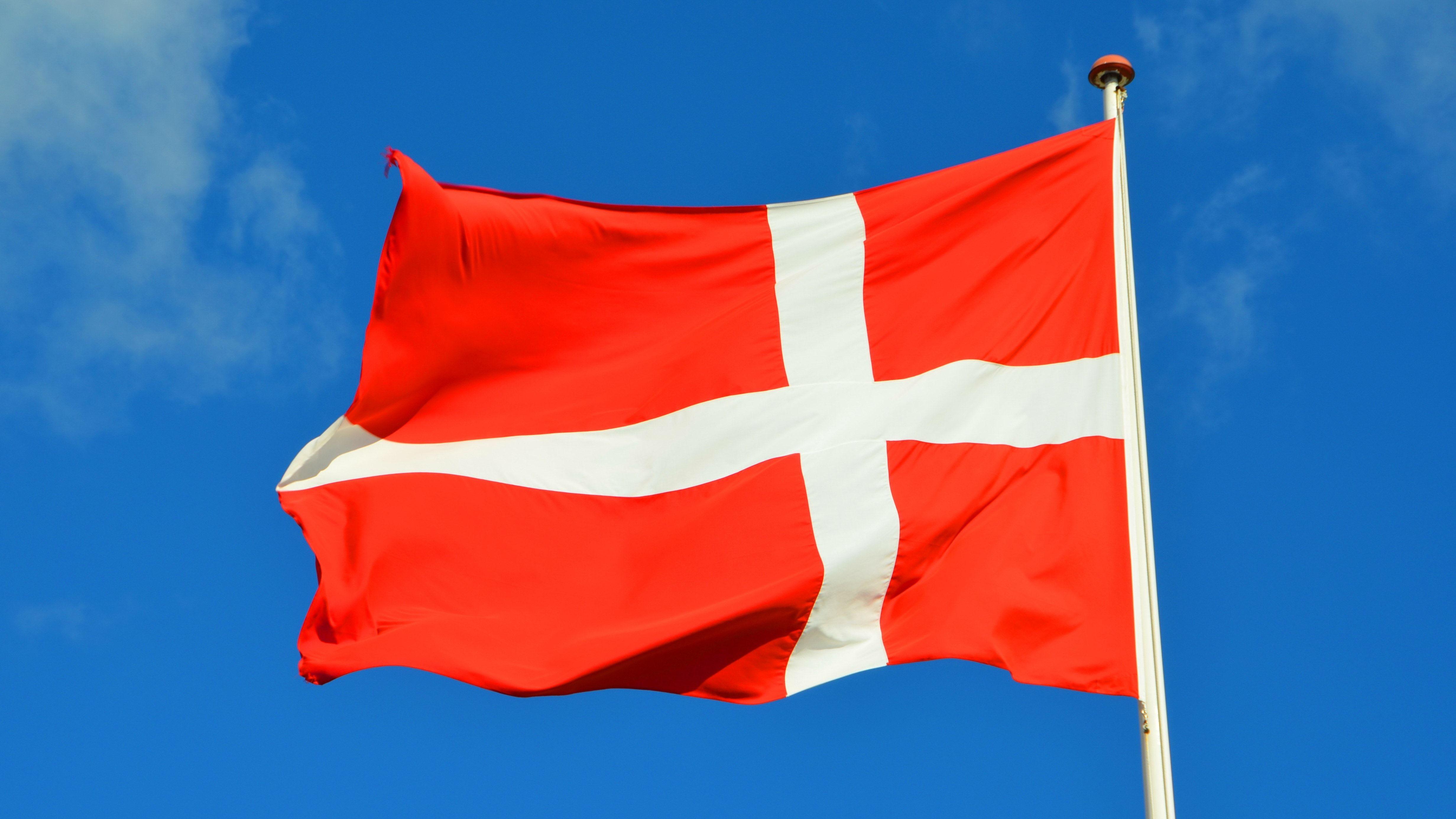
You're driving through a neighborhood, or maybe scrolling through a historical documentary, and you see it. A blue white red flag with cross design. It looks familiar, right? But then you realize there are about five different versions of this specific color palette and layout, and they all mean wildly different things.
Context is everything.
If you see these colors at a soccer match, you're likely looking at Iceland or Norway. If you see them in a dusty history book about the Caribbean, it’s the Dominican Republic. Honestly, it’s easy to get them mixed up because the combination of red, white, and blue is the most common trio in vexillology. But the cross—that's the "charge" that changes the whole story.
The Powerhouse: Norway’s "Off-Center" Cross
Most people looking for a blue white red flag with cross are actually thinking of Norway. It’s the most iconic version.
The Norwegian flag features a red field with a blue "Nordic cross" outlined in white. This isn't a symmetrical cross sitting in the middle. It’s shifted to the left, toward the flagpole. This is the classic Scandinavian style.
Why these colors? It’s kind of a mix of history and rebellion. Back in 1821, Fredrik Meltzer designed it. At the time, Norway was in a union with Sweden but had just come out of a long association with Denmark. Meltzer took the red and white of the Danish flag and slapped a blue cross in the middle to represent Sweden. He basically made a "color sandwich" that honored both neighbors while asserting Norway's own identity.
It’s a bold look. The red is deep, almost a "fire engine" red, while the blue is a darker navy. If you’re seeing a flag where the blue part is thin and the red part dominates, that’s Norway.
The Inverse: Iceland’s Icy Variation
Now, flip those colors.
Iceland uses the exact same layout as Norway—the off-center Nordic cross—but the colors are swapped. On the Icelandic flag, the background is a rich sky blue. The cross itself is red, outlined in white.
Adopted in 1918 (and officially in 1944 when they became a republic), the colors are super symbolic of the island’s geography. The blue represents the mountains and the Atlantic Ocean. The white is the snow and ice that covers the land. The red? That’s the fire from the volcanoes. It’s a literal map of the elements.
If the flag you saw felt "colder" or more oceanic, it was definitely Iceland. Interestingly, the blue used by Iceland has changed over the years. It used to be a lighter "ultramarine" but they darkened it slightly in recent decades to make it more distinct.
The Dominican Republic: The Symmetrical Outlier
Maybe the cross you saw wasn't shifted to the left. Maybe it was a big, thick white cross right in the center, dividing the flag into four distinct boxes.
That is the Dominican Republic.
This blue white red flag with cross is unique because it’s the only national flag in the world that features a Bible in its center (on the coat of arms). The layout is specific:
- Top left: Blue
- Top right: Red
- Bottom left: Red
- Bottom right: Blue
The white cross symbolizes salvation and the heritage of the people. The blue is for liberty, and the red represents the blood of the heroes who fought for independence. Unlike the Nordic flags, which feel very European and "structured," the Dominican flag has a vibrant, balanced energy that feels very different in person.
If you're looking at a small emoji or a tiny icon, you might miss the coat of arms in the middle, but that central white cross is the giveaway.
The British Connection: The Union Jack and Beyond
We can't talk about a blue white red flag with cross without mentioning the United Kingdom.
The Union Jack isn't just one cross; it’s three layered on top of each other. You’ve got the red cross of St. George (England), the white saltire (diagonal cross) of St. Andrew (Scotland), and the red saltire of St. Patrick (Ireland).
It’s messy. It’s complicated. It’s iconic.
But there’s also the British "Ensigns." Many territories and former colonies use a blue or red background with the Union Jack in the corner. If you see a blue flag with a red and white cross in the top-left quadrant, you might be looking at the state flag of Hawaii, or perhaps Australia or New Zealand (though those have stars too).
Why Do These Flags All Look the Same?
It's not a lack of creativity. It's history.
The "Cross" as a symbol in flags took off during the Crusades. Different regions adopted different colors to identify their knights. Over time, these became standardized. The Nordic cross specifically became a trend after Denmark’s "Dannebrog" (the oldest continuously used national flag) supposedly fell from the sky during a battle in 1219. Every other Scandinavian country basically said, "That looks cool, let’s do a version of that."
Red, white, and blue became the "colors of liberty" following the French and American revolutions.
When you combine a medieval religious symbol (the cross) with Enlightenment-era colors (red, white, blue), you end up with a lot of overlap.
Identifying the "Mystery" Cross Flag
If you’re still trying to pin down a specific flag, ask yourself these three questions:
- Is the cross centered or off-center? If it's off-center, look at Scandinavia (Norway/Iceland). If it's centered, look at the Caribbean (Dominican Republic) or perhaps specific military ensigns.
- Are the lines straight or diagonal? Straight lines are traditional crosses. Diagonal lines are "saltires." If it’s diagonal, you’re likely looking at something related to Scotland or the UK.
- Are there extra symbols? Stars, shields, or birds? If there's a shield in the middle of a white cross on a blue and red background, it's 100% the Dominican Republic. If there are stars on a blue field with a cross in the corner, check out Australia or New Zealand.
A Note on Regional and Historical Flags
Sometimes, the blue white red flag with cross isn't a country at all.
For instance, the flag of Saarland, a state in Germany, has used these colors in various configurations. There’s also the flag of the Front de libération du Québec (FLQ), which featured a white cross on a blue and red background during its era.
Even the "Southern Cross" constellation appears on many flags in the Southern Hemisphere. While not a geometric cross made of bars, it forms a cross shape using four or five stars. Samoa uses a red flag with a blue rectangle in the corner containing the white stars of the Southern Cross.
Actionable Tips for Flag Identification
If you have a photo of a flag and you're still stuck, don't just guess.
First, look at the proportions. A "long" flag is often naval. A "square" flag is often Swiss or specifically regimental.
Second, use a dedicated vexillology database like Flags of the World (FOTW). It’s a bit of an old-school website, but it’s the gold standard for flag nerds. You can search by "color" and "layout," which is much more effective than a generic Google search.
Third, check the "shade" of blue. Is it a light "U.N. blue" or a dark "Midnight blue"? This often distinguishes older colonial flags from modern national ones.
Identifying a blue white red flag with cross is mostly a game of elimination. Once you rule out Norway and Iceland, the list gets short very quickly.
Check the orientation of the bars. If the white is just a thin border (fimbriation) around a blue cross on a red field, you've found Norway. If the white is the main cross and it's thick, you're likely looking at the Dominican Republic or a specific maritime signal flag (like the letter 'X' in the International Code of Signals, though that’s blue on white).
Next time you see one, look for that off-center "Nordic" shift. It's the quickest way to tell if you're looking at a piece of Viking history or something else entirely.
Next Steps for Flag Enthusiasts
To accurately identify a flag you've seen in the wild, start by sketching the layout. Note whether the cross reaches the edges of the flag (a "through" cross) or floats in the middle. Once you have the layout, compare the blue and red shades against the official CMYK or Pantone values listed on sites like Vexilla Mundi to distinguish between similar national colors. If the flag has a coat of arms in the center of the cross, use a high-resolution zoom to identify specific symbols like the Bible, laurel branches, or crowns, which are the definitive markers of national identity.