You’re standing in the international aisle of a grocery store, staring at a refrigerated pack of yellow-tinged squares, wondering why they cost five dollars for what is essentially just flour and water. Honestly, it's a scam. Most people think making a recipe for wonton wraps at home is some guarded secret passed down through generations of dim sum masters, but it's actually just chemistry. It is basic. It is cheap.
Yet, most home cooks fail on their first try because they treat the dough like pizza crust. It’s not pizza. If you can't see the light through your dough, you haven't made a wonton; you've made a dumpling, and there is a massive difference in the world of Cantonese cuisine. Wontons should be ethereal. They should "swim" in the broth like clouds—which is literally what the name húntún implies in some dialects.
The Science of the "Yellow" Dough
Let's talk about the elephant in the room: the color. If you look at a professional recipe for wonton wraps, you'll notice they have a distinct golden hue. A lot of folks assume this is just eggs. While eggs add richness and protein structure, that classic "noodle shop" smell and snap actually come from alkaline water or potassium carbonate.
In a traditional setting, like the old-school shops in Hong Kong, they use "kansui." This is an alkaline solution that reacts with the wheat flour to prevent the dough from getting mushy in hot soup. It also gives the wrappers that slippery, silky texture that slides off the spoon. If you’re making these at home and you don’t have access to a specialty market, you can actually bake baking soda in the oven at 250°F for an hour to change its chemical composition, making it more alkaline. Or just use extra egg yolks. It’s easier.
Gluten is Your Enemy and Your Friend
You need high protein. Bread flour is often better than all-purpose here because you need to roll this stuff until it is thinner than a piece of stationery. Without enough gluten, the dough just tears. But here’s the kicker: once you develop that gluten, you have to let it sleep. If you try to roll out wonton dough immediately after kneading, it will snap back like a rubber band.
Give it two hours.
Seriously. Wrap it in plastic and let it sit on the counter. The proteins need to relax. If you skip this, you'll end up with thick, chewy skins that ruin the delicate balance of a shrimp filling.
The Actual Process (No Fluff)
You need two cups of high-grade flour. Sift it. Don't be lazy. One large egg, half a teaspoon of salt, and about a quarter cup of water—though the water amount varies depending on how humid your kitchen is today.
- Create a well in the flour.
- Drop the egg and salt in the middle.
- Slowly incorporate the water.
The dough will feel dry. It will feel like you've made a mistake. You'll want to add more water. Don't do it. A wet wonton dough is a nightmare to roll out because it sticks to everything. It should be a stiff, somewhat shaggy ball that requires some elbow grease to smooth out. Knead it for at least ten minutes. Your forearms should hurt a little. That’s how you know you’re doing it right.
The Rolling Nightmare
Once the dough has rested and is supple, you have a choice. You can use a rolling pin, or you can use a pasta machine. If you value your sanity, use the pasta machine. You want to get down to the thinnest setting—usually a 7 or 8 on most Italian-made machines like an Atlas 150.
If you are going the manual route, you need a heavy dowel-style rolling pin. Cornstarch is your best friend here. Do not use flour for dusting. Flour contains gluten and will eventually bond with the dough, making it gummy. Cornstarch is pure starch; it stays on the surface and creates a silky barrier that allows you to stack fifty wrappers without them ever sticking together. It’s the "secret" that makes store-bought ones look so powdery.
Why Your Wrappers Tear
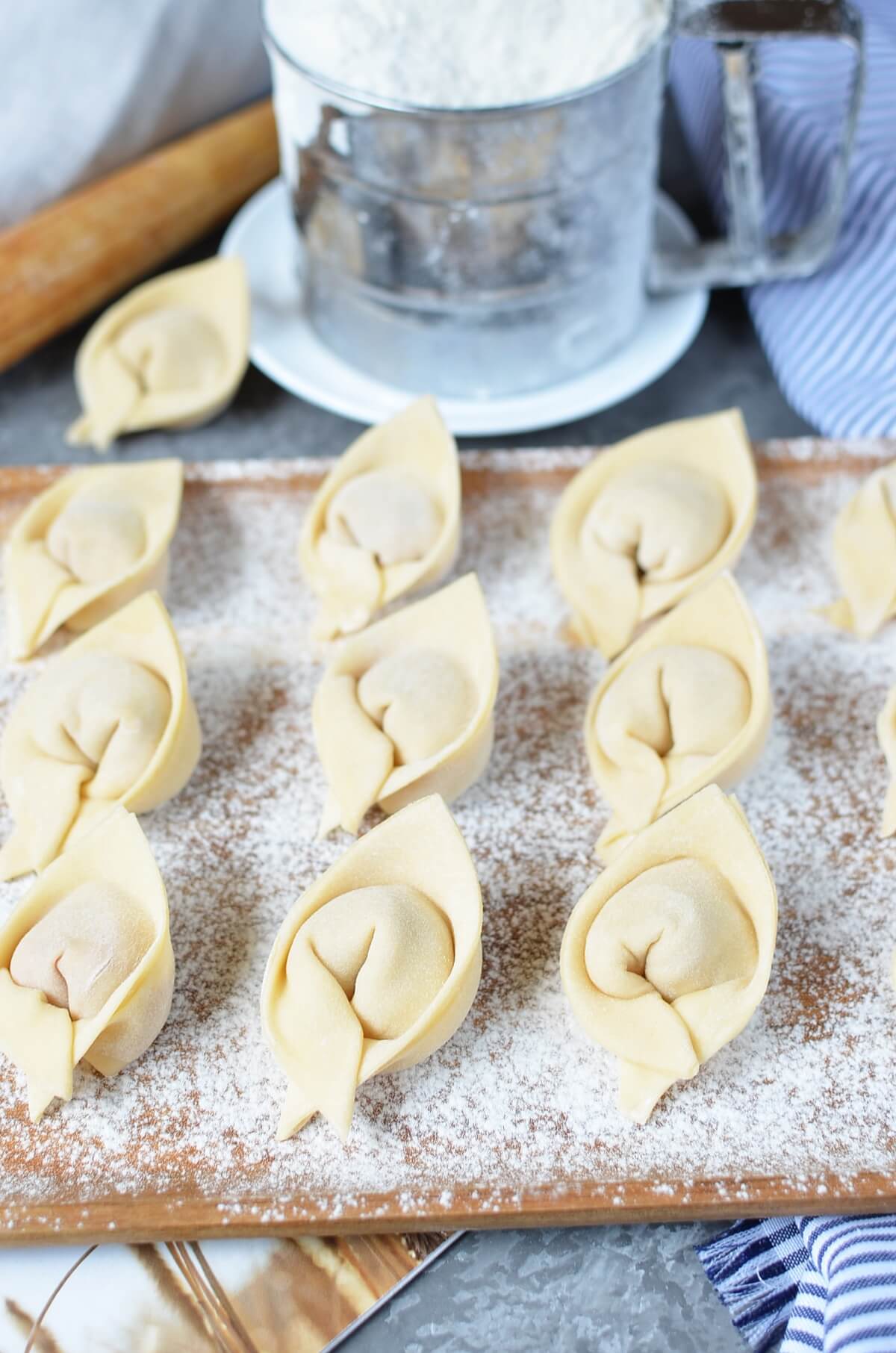
When people search for a recipe for wonton wraps, they usually complain about the structural integrity. They fall apart in the pot. This usually happens because of "air pockets." When you’re folding your wontons—whether you’re doing the "nurse’s cap" fold or a simple triangle—you have to squeeze out every bit of air.
Air expands when it hits boiling water.
If there’s a bubble inside, the wrapper will bloat and pop. Also, watch your edges. Use a tiny bit of water or an egg wash to seal them, but don't over-saturate. Too much water turns the dough back into paste.
Real Talk on Regional Differences
There isn't just one type of wonton.
- Cantonese Style: These are the ones usually found in wonton noodle soup. They are thin, square, and usually filled with a mix of shrimp and pork.
- Shanghai Style: Often called Huntun, these use a slightly thicker, whiter wrapper and are often folded into a "yuanbao" (gold ingot) shape.
- Sichuan Style: These are the famous Chao Shou. The wrappers are often a bit sturdier because they need to hold up to being drenched in heavy chili oil and black vinegar.
The recipe for wonton wraps we’re discussing here leans toward the Cantonese style because it’s the most versatile. You can fry them, steam them, or boil them.
Troubleshooting the Texture
If your finished wontons feel "doughy," you didn't roll them thin enough. You should be able to read a newspaper through the dough. If they are too soft and fall apart, you likely used too much water in the initial mix or used a flour with too low of a protein content.
Another common issue is "graying." If you leave fresh dough in the fridge for more than a day, it starts to oxidize and turn a weird, unappetizing gray color. This doesn't mean it's spoiled, but it looks terrible. If you aren't using them within a few hours, freeze them. Wonton wraps freeze beautifully. Just put a layer of parchment or a heavy dusting of cornstarch between them and toss them in a freezer bag. They cook straight from frozen in about three to four minutes.
Making Your Own vs. Buying
Is it worth it? Honestly, sometimes no. If you have a high-quality Asian grocer nearby that sells fresh, thin "Hong Kong Style" wrappers, just buy them. They use industrial rollers that achieve a level of thinness that is hard to mimic by hand.
However, if you live in a place where the only option is the thick, leathery "egg roll skins" sold at big-box supermarkets, then making your own is a revelation. The difference in mouthfeel is night and day. Home-made versions have a certain "snap" and freshness that commercial ones lose after sitting in a plastic bag for three weeks.
Plus, you control the ingredients. No yellow dye #5, no weird preservatives. Just flour, egg, and salt.
Essential Next Steps
Start by making a small batch. Don't try to make 100 on your first go.
- Step 1: Purchase a small kitchen scale. Volumetric measurements (cups) are notoriously inaccurate for pasta-style doughs. You want roughly 100g of flour to one large egg.
- Step 2: Find a large, clean surface for rolling. You need space to stretch the dough.
- Step 3: Get some cornstarch. A lot of it.
- Step 4: Once you've mastered the recipe for wonton wraps, start experimenting with fillings. A classic pork and ginger filling is a great baseline, but the wrapper is the star.
Avoid the temptation to use a food processor to "roll" the dough. It can work for the initial mixing, but it doesn't provide the same gluten alignment that kneading and rolling do. Stick to the traditional methods for the best results. Your soup will thank you.
Once you have your stack of wrappers, keep them covered with a damp (not wet) cloth while you work. They dry out in minutes, and once they get brittle, they’re useless for folding. Work fast, keep your hands dry, and remember that the first five will probably look ugly. That’s okay. They still taste like victory.