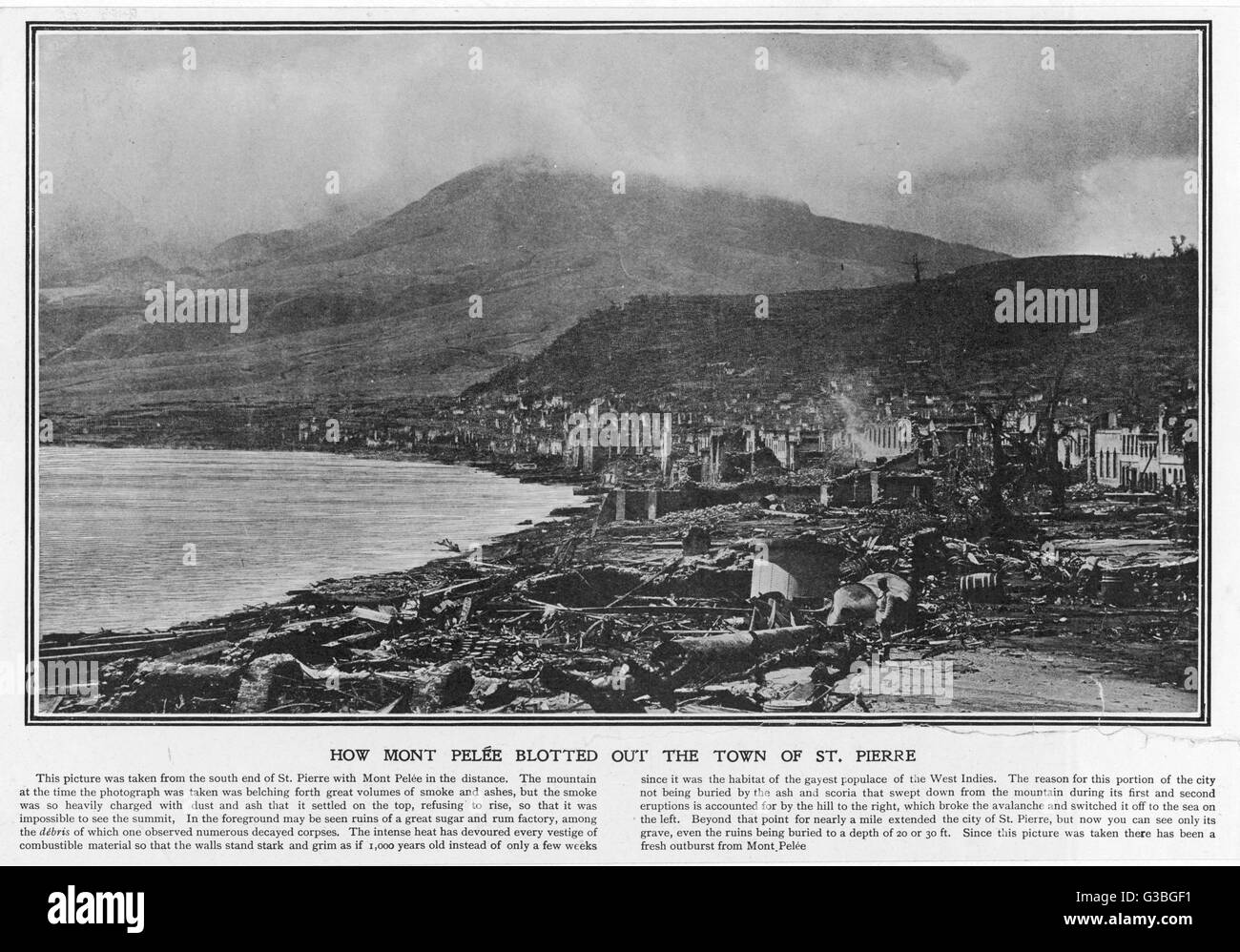
St. Pierre used to be called the "Paris of the West Indies." It was a place of rum, theater, and high society on the Caribbean island of Martinique. Then, on a Thursday morning in May 1902, it just stopped existing. In roughly three minutes, the eruption of Mt Pelee wiped out about 30,000 people. Only a handful survived. One was a prisoner in a dungeon; another was a shoemaker. It's probably the most terrifying example of what happens when politics and plate tectonics collide at the worst possible moment.
The mountain had been grumbling for weeks. Ash was everywhere. It tasted like metal. People were literally walking around with handkerchiefs over their mouths, trying to breathe. But there was an election coming up on May 11. The local governor, Louis Mouttet, didn't want everyone fleeing to the countryside because it would mess up the vote. He basically told everyone to stay calm and stay put. He even brought his wife to the city to show it was "safe." It wasn't.
The Disaster That No One Saw Coming (But Should Have)
Nature usually gives you hints. By late April 1902, Mt Pelee wasn't just hinting; it was screaming. Ground tremors were constant. Fumaroles—those holes in the ground that spit out gas—were opening up all over the place. Dead birds were falling out of the sky because the air was so thick with sulfur. It sounds like a horror movie, right? But back then, people didn't really understand how volcanoes worked, at least not the "gray" ones like Pelee. They thought the worst that could happen was some lava flow that you could just walk away from.
Then the snakes came.
Because the mountainside was getting too hot, thousands of pit vipers (the deadly Fer-de-lance) slithered down into the lowlands. They swarmed the outskirts of St. Pierre. They killed hundreds of livestock and at least 50 humans before the volcano even blew its top. Imagine being a resident: you've got ash raining down, the ground is shaking, and now you’re fighting off a literal plague of venomous snakes.
By May 5, a massive mudslide—a lahar—triggered by a boiling lake at the summit tore down the Blanche River valley. It buried a sugar refinery and killed 150 people. Still, the government commission insisted the city was safe. They were wrong in the most catastrophic way possible.
The Nuée Ardente: A Wall of Fire
At 7:52 AM on May 8, 1902, the eruption of Mt Pelee reached its climax. It wasn't just a blast of smoke. The mountain literally split. A massive, glowing cloud of superheated gas and volcanic debris—what we now call a nuée ardente or pyroclastic flow—shot out of the side of the volcano.
It didn't go up. It went down.
This cloud was moving at over 100 miles per hour. The internal temperature was likely over 1,000 degrees Celsius. When it hit St. Pierre, it didn't just burn things; it pulverized them. Brick walls three feet thick were snapped like toothpicks. The pressure alone killed people instantly by collapsing their lungs. Most victims were found in their homes, frozen in time, carbonized before they could even stand up from the breakfast table.
The Survivors Who Shouldn't Have Lived
There are two names you always hear when people talk about Pelee: Ludger Sylbaris and Léon Compère-Léandre.
Sylbaris was a troublemaker. He’d been thrown into a tiny, poorly ventilated stone dungeon for a drunken brawl. That cell saved his life. The thick walls and the lack of a window meant the heat couldn't get in fast enough to kill him, though he was horribly burned by the hot air that seeped through the door slit. He was found four days later, screaming for help in a dead city. He eventually joined Barnum & Bailey’s Circus as "the man who lived through Doomsday."
Léon Compère-Léandre was a shoemaker. He managed to run into a room and shut the door while others around him were dying. He described the sensation as a "dry heat" that set his clothes on fire. He jumped out a window and ran toward the coast, eventually found by rescuers. These stories aren't just anecdotes; they are the only reason we know what those final minutes felt like on the ground.
Why This Changed Science Forever
Before 1902, volcanology was mostly just people looking at rocks. After the eruption of Mt Pelee, everything changed. A French geologist named Alfred Lacroix went to the island to study the aftermath. He was the one who coined the term pyroclastic flow.
He realized that volcanoes don't just spill lava like a leaky faucet. Some of them explode laterally. This was a massive "aha" moment for science. If we understand why Mt Pelee behaved the way it did, we can predict why places like Mt. St. Helens or Vesuvius are so dangerous.
- The Spine of Pelee: After the main eruption, a weird "needle" of lava pushed out of the crater. It grew to be about 1,000 feet tall. It looked like a giant tooth sticking out of the mountain. It eventually crumbled, but it showed scientists just how much pressure was trapped inside the dome.
- Atmospheric Pressure: The shockwave from the May 8 blast was so strong it was recorded by barographs in Paris.
- Subduction Zones: We now know Pelee is part of the Lesser Antilles volcanic arc. It’s caused by the Atlantic plate sliding under the Caribbean plate. It's a conveyor belt of magma that isn't stopping anytime soon.
Misconceptions About the Death Toll
You’ll often see the number "30,000" tossed around. It’s a good estimate, but the truth is we’ll never actually know. St. Pierre was crowded with refugees from the countryside who had fled the earlier ash falls. The city was basically at double capacity.
Also, people think everyone died of fire. Most actually died from asphyxiation. The cloud of gas replaces all the oxygen. You take one breath, your throat sears shut, and you’re gone. It’s grim, but it’s the reality of a Pelean eruption.
Visiting Martinique Today
If you go to Martinique now, you can still see the ruins. It’s a bit eerie. You’ve got modern buildings sitting right next to 18th-century stone walls that were melted by the blast. The Musée Volcanologique in St. Pierre has these everyday objects—clocks stopped at 7:52, melted glass bottles, scorched food—that make the tragedy feel very "real" and not just a page in a history book.
The volcano is still active. It’s monitored 24/7 by the Observatoire Volcanologique et Sismologique de la Martinique (OVSM). They have sensors all over the "Pelée" massif. It's currently at an "Alphabet" alert level that signifies it's resting but restless.
How to approach a visit:
- The Ruins: Spend time at the old theater. It was once the center of Caribbean culture. Now it's a shell.
- The Hike: You can hike to the summit (Le Chinois). It’s a tough climb, often shrouded in mist, but on a clear day, you can see the entire arc of the disaster.
- The Dungeon: You can still visit Sylbaris' cell. It’s tiny. It puts "social distancing" into a whole different perspective.
What We Learned (The Hard Way)
The biggest takeaway from the eruption of Mt Pelee isn't about rocks; it's about human psychology. The disaster happened because people in power ignored the warning signs for political gain. They prioritized an election over an evacuation.
Today, we have better technology, but the "human element" remains the same. When a volcano starts acting up, the tension between economic stability and public safety is always there.
Actionable Steps for the Curious:
- Check the Global Volcanism Program: If you live near a volcano, use the Smithsonian Institution’s database to see its history. Pelee isn't unique; it's a template for "stratovolcano" behavior.
- Support Real-Time Monitoring: Volcanic observatories are often underfunded. Advocacy for geological survey budgets saves lives.
- Study the "Pelean" Style: If you're a student of history or science, look into the 1980 Mt. St. Helens eruption. Notice the similarities. The lateral blast that caught everyone off guard in Washington State was almost a carbon copy of what happened in Martinique 78 years earlier.
The mountain is quiet for now. But in the world of geology, "quiet" is just another word for "getting ready."
Source Reference Check:
- Alfred Lacroix, "La Montagne Pelée et ses éruptions" (1904) - The definitive scientific account.
- Ernest Zebrowski, "The Last Days of St. Pierre" (2002) - Excellent breakdown of the political failure.
- Smithsonian Institution Global Volcanism Program - Current status of Mt. Pelee.