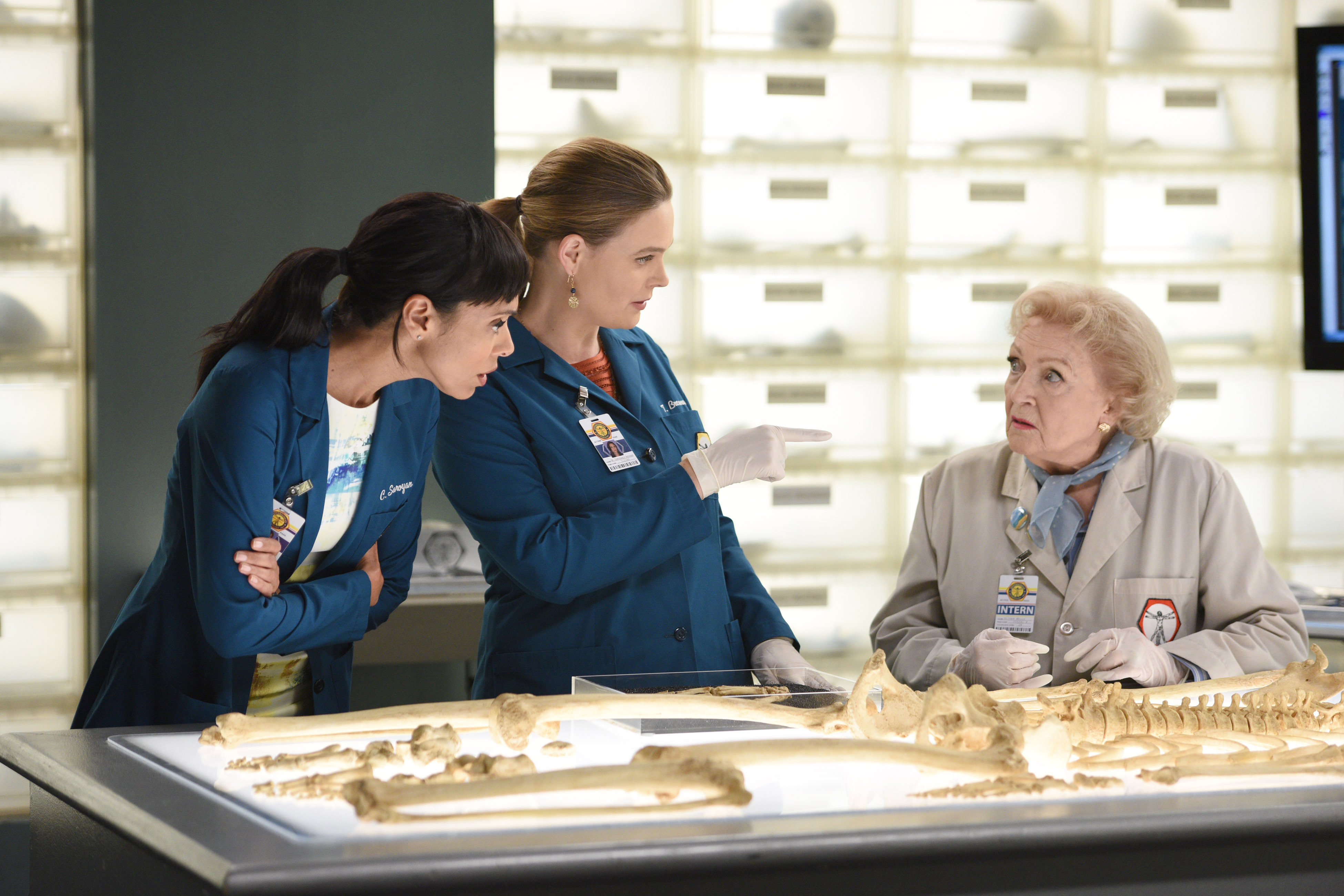
Twelve years. That is a massive chunk of time to spend with any group of people, even if they only exist on a TV screen. By the time the Bones TV series finale rolled around in March 2017, Temperance Brennan and Seeley Booth weren't just characters. They were a weekly habit. People grew up, went to college, got married, and had kids while Brennan was squinting at exit wounds and Booth was flashing his "Cocky" belt buckle.
Honestly? Most long-running procedurals just... fade. They get cancelled abruptly, or they overstay their welcome until the original cast is a ghost of its former self. But Bones didn't do that. It went out on its own terms with a two-part send-off that basically functioned as a love letter to the fans who stuck through the "will-they-won't-they" years and the weird Gormogon arcs.
The finale, titled "The End in the End," didn't just wrap up a case. It threatened the very thing that defined the show: Brennan’s brain.
The Jeffersonian in Ruins
The penultimate episode, "The Day in the Life," ended on a genuine cliffhanger. A bomb in the lab. It felt personal because the Jeffersonian was the show's heartbeat. When the finale opens, we see the wreckage. It's bleak. Seeing the Medico-Legal lab—a place of clinical order—turned into a graveyard of drywall and shattered glass was a gut punch.
But the real stakes weren't the building. It was Brennan.
Hart Hanson and the writing team made a bold choice here. They gave Brennan a minor brain injury that stripped away her ability to process complex information. For a woman whose entire identity is built on being the smartest person in the room, it was a living nightmare. Imagine being a world-class linguist and suddenly forgetting how to read. That’s what we were watching. Emily Deschanel played this with a subtle, heartbreaking confusion. It wasn't over-the-top. It was just a quiet, terrifying loss of self.
Why the Kovac Storyline Worked (And Why it Didn't)
Mark Kovac was the final big bad. Was he the best villain the show ever had? Probably not. He doesn't have the chilling, intellectual presence of Howard Epps or the tech-savvy nightmare fuel of Christopher Pelant. Kovac was a revenge-driven ghost from Booth’s past as a sniper.
In some ways, Kovac felt like a plot device to get us to the explosion. He was the "how," but the "why" of the finale was always the internal dynamics of the team. We needed a reason for Brennan, Booth, Hodgins, and Angela to be trapped in that lab. Kovac provided the fuse, but the emotional payoff came from how they crawled out of the rubble together.
Some fans argue that the "revenge for a father I never knew" trope was a bit thin for a series finale. I get that. It felt a little "Case of the Week" on steroids. However, it allowed the show to circle back to Booth’s history. It reminded us that before he was a family man and an FBI legend, he was a soldier who had to make impossible choices.
The Squinterns and the Legacy of the Lab
One of the best parts of the Bones TV series finale was the way it handled the rotating cast of interns. Having them all work together to solve the final puzzle felt right. Each of them—Clark, Daisy, Arastoo, Wendell—represented a different facet of Brennan's mentorship.
Think about it. Brennan started the series as a cold, socially isolated scientist who barely tolerated people. By the end, she had built a legacy.
Seeing the interns scramble to be her "brain" while she was incapacitated showed how much she had taught them. They weren't just lab assistants; they were her intellectual children. This is where the show’s heart lived. It wasn't in the gore or the forensics. It was in the realization that these people had become a functional, albeit weird, family.
That Final Scene on the Bench
The show didn't end with a wedding or a massive explosion. It ended with two people talking on a bench.
Booth and Brennan are packing up their offices. They find old mementos—the drawing of the "Parker" house, the "Cocky" belt buckle, the Jasper the pig figurine. It was a trip down memory lane that didn't feel like a cheap clip show. When they walk out of the Jeffersonian for the last time, they sit down and just... are.
Brennan’s brain is healing. She’s getting her groove back. But there’s this beautiful moment where she acknowledges that even if she weren't the "best" anymore, she would still be okay because she has Booth. That is massive character growth. The Brennan from Season 1 would have found that idea statistically improbable and emotionally repulsive.
The very last line of the show? It’s a bicker. A classic, low-stakes argument about the "4:47" time stamp that had haunted the series for years. It was perfect. It told us that even though we were stoping our watch, their lives were going to keep going in exactly the same way.
What Most People Get Wrong About the Ending
There’s a common critique that the finale was "too safe." People wanted more permanent consequences. Maybe a major character should have died?
I disagree.
Bones was always, at its core, a "comfort" procedural. It dealt with death every single week, often in the most gruesome ways imaginable. Giving the fans a happy ending wasn't a cop-out; it was a reward. We already lost Sweets in Season 10 (a wound that honestly never fully healed). Killing off Hodgins or Angela in the final hour would have felt mean-spirited.
The "consequence" wasn't death. It was change. The Jeffersonian was going to be rebuilt, but it would be different. Cam and Arastoo were leaving to start a life together. Hodgins was finally "King of the Lab" (officially). The status quo shifted just enough to feel like a conclusion without shattering the world we loved.
Technical Brilliance in the Rubble
From a production standpoint, the finale was a beast. The set designers actually tore down parts of the Jeffersonian set that had stood for a decade. For the actors, walking through that destruction was genuinely emotional. David Boreanaz and Emily Deschanel have both mentioned in interviews that seeing the "bone room" in pieces made the end of the job feel real in a way the script hadn't quite managed yet.
The lighting in those scenes was also noticeably different. Bones usually had a very bright, sterile, high-key lighting style for the lab. The finale used shadows and debris to create a sense of claustrophobia that we hadn't seen since "Aliens in a Spaceship." It was a nice visual callback to one of the show’s highest-rated episodes.
Key Takeaways for Your Next Rewatch
If you’re heading back to the pilot after reading this, keep an eye on these specific details in the finale to see how the circle closes:
- The Objects: Look at the items Brennan puts in her box. Almost every one of them is a reference to a specific case or a turning point in her relationship with Booth.
- The 4:47 Mystery: This number appeared throughout the series—on clocks, in hospital rooms, and finally in the explosion. It was the writers' little "Easter Egg" for the observant fans.
- The Dialogue Parallels: Listen to the way Booth and Brennan talk about their partnership. It mirrors their conversation in the pilot, but with the walls completely down.
The Bones TV series finale worked because it didn't try to reinvent the wheel. It knew what it was: a show about bones, but more importantly, a show about the connective tissue between people. It gave us closure, a few laughs, and the reassurance that the "Center of the Universe" (the Jeffersonian) was in good hands.
Actionable Insights for Fans
- Watch the "Bones: Back to the Lab" Special: If you haven't seen the retrospective that aired alongside the finale, find it. It features the cast's real reactions to the set being dismantled.
- Track the 4:47 Appearances: Start a rewatch and see how many times that specific time appears before the finale. It's more frequent than you think.
- Check Out the Books: Remember that Kathy Reichs, the real-life forensic anthropologist who inspired the show, has a massive library of Temperance Brennan novels. They are vastly different from the show (the book Brennan is older and lives in Montreal), but they offer a deeper look at the science that made the finale possible.