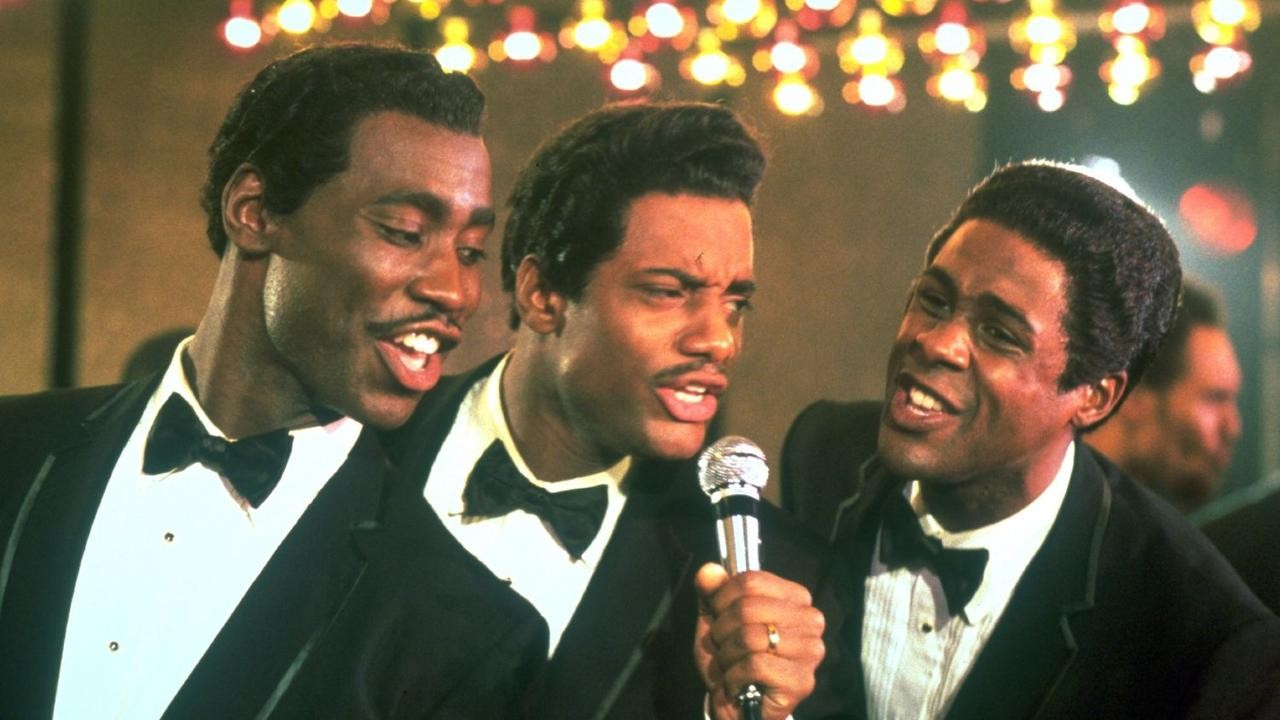
It was 1998. If you were sitting in front of a TV when NBC aired that two-night miniseries event, you probably didn't realize you were watching lightning get bottled. Most biopics feel like a costume party. You see a famous actor in a wig, you hear a decent impression, and you move on. But the cast from The Temptations movie did something different. They didn't just play Otis, Eddie, Paul, Melvin, and David. For a lot of us, they became them.
Honestly, it’s rare. You’ve got these five guys who had to sync up their harmonies, nail the "Temptation Walk," and carry the emotional weight of a legacy that defined Motown. It wasn’t just about the singing. It was about the brotherhood and the inevitable, messy fallout that comes with fame.
Even now, decades later, when people talk about the "Classic Five," half the time they’re visualizing the faces of the actors from the movie rather than the original singers. That’s the power of casting done right.
Meeting the Men Behind the Mic
Let’s get into the actual guys who pulled this off.
Charles Malik Whitfield played Otis Williams. He had a tough job. Otis is the narrator, the "founder," and the guy who had to keep the wheels from falling off the wagon. Whitfield brought this grounded, almost stoic energy to the role. He wasn't the flashy one. He was the anchor. Since Otis Williams himself was an executive producer and his book served as the source material, Whitfield had the heavy task of portraying the man who lived to tell the tale.
Then you have D.B. Woodside as Melvin Franklin. "Blue." If you know anything about the Tempts, you know Melvin was the heart. Woodside nailed that deep, resonant bass voice, but more importantly, he captured the sweetness. The friendship between Otis and Melvin in the film is basically the emotional spine of the entire four-hour runtime.
But we have to talk about the "trouble" roles.
Christian Payton took on Paul Williams. This is arguably the most heartbreaking performance in the film. Paul was the original choreographer, the guy who gave the group their swagger, but his battle with the bottle and his failing health is painful to watch. Payton played it with such vulnerability. You didn't just see a guy losing his spot in a band; you saw a man losing his soul.
The David Ruffin Energy
Leon. Just Leon.
If you're looking for the breakout, it’s him. Leon Robinson (who usually just goes by Leon) was already a bit of a star after Cool Runnings and Above the Rim, but his portrayal of David Ruffin is legendary. Ruffin was a firecracker. He was the greatest tenor in soul music, but he was also a nightmare to work with toward the end.
Leon didn't just mimic Ruffin’s rasp. He captured the ego. That scene where he climbs onto the stage after being kicked out of the group? "Nobody joins the Temptations, and nobody leaves the Temptations." It’s iconic. People still quote that today. He managed to make you love Ruffin for his talent and absolutely despise him for his arrogance all in the same breath.
And then there’s Terron Brooks as Eddie Kendricks. Eddie was the falsetto. The "pretty boy" with the high notes. Brooks had to play the bridge between the different eras of the group, eventually siding with David but always keeping that slick, polished demeanor.
Why the Chemistry Worked
You can't fake that kind of chemistry. The cast from The Temptations movie actually spent weeks in "boot camp" before filming started. They weren't just learning lines. They were learning how to move as one unit.
Choreographer Cholly Atkins, who actually worked with the real Temptations back in the day, was involved in the production. He put these actors through the ringer. They had to learn the routines for "My Girl," "Ain't Too Proud to Beg," and "I Can't Get Next to You" until it was muscle memory.
The result? When you watch the "I'm Losing You" sequence, it doesn't look like actors doing a dance. It looks like a professional group at the height of their powers.
Beyond the Lead Five
It wasn’t just the main guys. The supporting cast was stacked with people who actually understood the Motown machine.
- Obba Babatundé as Berry Gordy: He brought that sharp, business-first intensity that defined the Motown era.
- Jenifer Lewis as Mama Rose: Every time she was on screen, she stole it. She provided the warmth that the movie needed to balance out all the backstage bickering.
- Vanessa Bell Calloway as Anna Gordy Gaye: A small but pivotal role that added layers to the Motown family dynamic.
One thing people get wrong about this movie is thinking it's a 100% literal documentary. It’s not. It’s based on Otis Williams’ perspective. Some former members and their families have contested how certain events were portrayed, particularly the depiction of David Ruffin’s death or the timeline of Paul Williams’ struggles.
But even with those historical debates, the performances are what stay with you. You aren't watching a history lecture. You're watching a tragedy about five friends who changed music and then grew apart.
The Long-Term Impact on the Actors
Where are they now?
D.B. Woodside went on to have a massive career. You’ve seen him in 24 as President Wayne Palmer, and more recently, he was Amenadiel in Lucifer. He’s a heavyweight in the industry now.
Leon is still Leon—working consistently in film and touring with his band, Leon and the Peoples. He’s one of those actors who is so synonymous with his roles (David Ruffin and Little Richard) that he’s basically a biopic king.
Charles Malik Whitfield has been all over your TV screen, from The Guardian to Empire. He’s stayed busy.
Terron Brooks and Christian Payton have continued to work in music and theater, which makes sense given the vocal chops they displayed in the film.
The legacy of this cast is that they set the bar. Before this, TV biopics were often cheesy and cheap. This one felt cinematic. It felt expensive. It felt real. It’s the reason why, when the movie pops up on a random Saturday afternoon on VH1 or BET, you find yourself sitting through the whole thing for the fiftieth time.
How to Experience the Legacy Today
If you’re a fan of the film or just discovering it, there are a few ways to dive deeper into what made this cast and the original group so special.
First, go back to the source. Read Temptations by Otis Williams. It’s the book the movie is based on. You’ll see exactly where the dialogue and the structure of the film came from. Just keep in mind that it's Otis's truth, and like any "band dad," he’s got his own biases.
Second, watch the 1998 miniseries again, but pay attention to the background. Look at the way the actors react when they aren't the ones singing. The subtle nods, the looks of frustration, the small mistakes in the choreography that were left in to show the group's exhaustion—that's where the "human" quality of the acting really shines.
Finally, check out the Broadway musical Ain't Too Proud. It’s interesting to see how a different cast handles the same roles. You'll realize just how much the 1998 film cast influenced the public's perception of these legends.
The cast from The Temptations movie didn't just give us a movie; they gave us a definitive version of a story that continues to resonate. They reminded us that behind the matching suits and the perfect harmonies, there were just five guys trying to make it, and that’s a story that never gets old.
Actionable Insights for Fans:
- Compare the Perspectives: To get a balanced view of the history, look up interviews with the families of David Ruffin and Eddie Kendricks. They offer a different take on the events portrayed in the Otis Williams-produced film.
- Watch for the "Ghost" Vocals: While the actors did an incredible job, most of the singing in the film features the actual Temptations' studio recordings or sound-alikes blended with the actors' voices. Try to spot the transitions.
- Track the Career Shifts: Follow the current projects of D.B. Woodside and Charles Malik Whitfield on social media to see how they've evolved from their "Classic Five" days into veteran character actors.